















Germany’s foreign intelligence chief has called for a fundamental shift in how the country’s spy services operate, arguing that passive observation is no
longer enough to counter increasingly aggressive hybrid threats linked to Russia.
Speaking at the Munich Security Conference, Martin Jaeger, head of the BND, said Germany must give its intelligence agencies greater operational freedom after decades of restraint shaped by the legacy of World War Two and the abuses of state surveillance under past regimes.
“The threat from hybrid warfare has been clearly identified,” Jaeger told a panel discussion. “Deterrence is not working yet. That forces us to ask a difficult question: do we simply continue to observe and document these developments, or have we reached the point where active countermeasures are necessary?”
Jaeger said that question applies directly to the BND itself. In his view, Germany’s foreign intelligence service “must and will become more operational” if it is to respond effectively to modern threats.
He pointed to a major Russian-linked influence operation uncovered ahead of last year’s federal election. According to Jaeger, the campaign relied on a mix of pseudo-investigative reports, deepfake content, and fabricated witness testimonies spread across multiple platforms in an attempt to manipulate public opinion.
Beyond disinformation, Jaeger warned of a sharp rise in physical threats. German police recorded 321 acts of sabotage last year, many of which authorities believe were likely connected to Russian activities, he said.
Moscow has consistently denied running disinformation or sabotage networks. However, concerns about Russian hybrid warfare have been a recurring theme among Western governments since Russia annexed Crimea in 2014 and launched its full-scale invasion of Ukraine in 2022.
The call for stronger intelligence powers has backing at the highest political level. German Chancellor Friedrich Merz told the conference that bolstering intelligence capabilities would be part of a broader effort to rebuild Germany’s armed forces and strengthen national resilience.
“We will protect our free democratic order from both internal and external enemies,” Merz said, adding that the old rules-based international order could no longer be taken for granted.
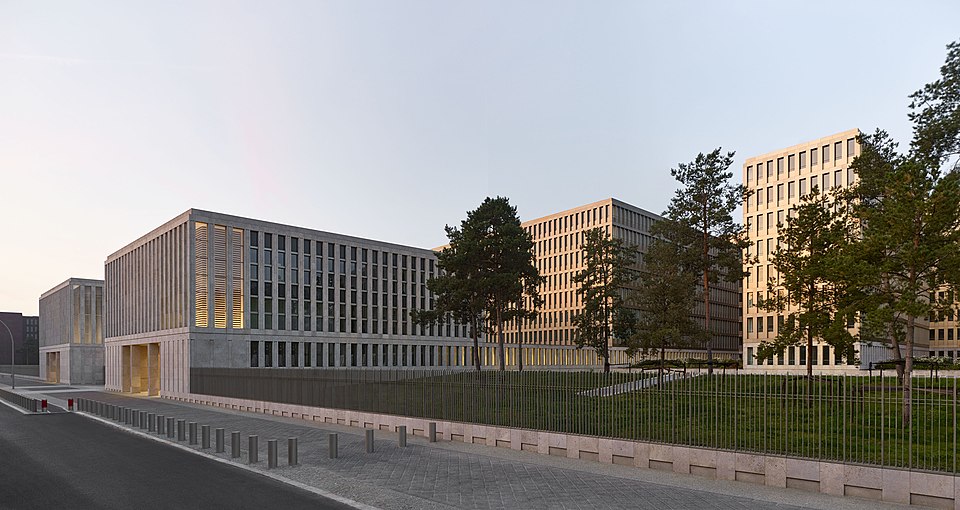
Meanwhile, Germany’s parliament is debating draft legislation that would loosen some of the strict legal constraints currently governing the country’s intelligence agencies. If passed, the new bill would allow them to take more proactive measures in response to security threats—marking a significant shift in Germany’s long-standing approach to intelligence and surveillance. Photo by Jan Kleihues (Stefan Müller, photographer), Wikimedia commons.