











Hungarians headed to the polls on Sunday in a closely watched parliamentary election that could reshape the country’s political future and reverberate across Europe and beyond.
The vote is being monitored not only in regional capitals like Warsaw, but also in global power centers such as Washington and Moscow.
At the center of the contest is long-serving Prime Minister Viktor Orbán, who has dominated Hungarian politics for 16 years. His nationalist, Eurosceptic leadership style—often described by himself as building an “illiberal democracy”—has drawn both admiration and criticism internationally. Supporters see him as a defender of sovereignty and traditional values, while critics argue his governance has weakened democratic institutions.
The election could mark a significant shift. Analysts suggest a defeat for Orbán would send shockwaves through right-wing movements across Europe, many of which have looked to Hungary as a political model.
Poland’s Prime Minister Donald Tusk has framed the vote as a potential turning point for the continent, particularly after recent gains by Eurosceptic and pro-Russian political forces. A change in leadership in Budapest could alter regional alliances and influence debates within the European Union.
Orbán’s main challenger, Péter Magyar, leads the centre-right Tisza party, which has gained momentum in recent months. Opinion polls suggest Tisza is ahead by several percentage points, reflecting growing frustration among voters over economic stagnation, rising living costs, and concerns about corruption.
What’s at stake in Hungary’s election
This parliamentary election will determine the composition of Hungary’s 199-seat National Assembly and, ultimately, who forms the next government. Key issues shaping voter sentiment include:
- Economic pressures: Inflation and cost-of-living increases have strained households.
- Rule of law concerns: Ongoing tensions with the European Union over judicial independence and media freedom.
- Foreign policy direction: Hungary’s stance toward Russia and its role within NATO and the EU.
- Governance model: Whether Orbán’s “illiberal” system continues or shifts toward a more traditional European democratic framework.
Polling stations opened at 6 a.m. local time and are scheduled to close at 7 p.m., with results expected later in the evening.
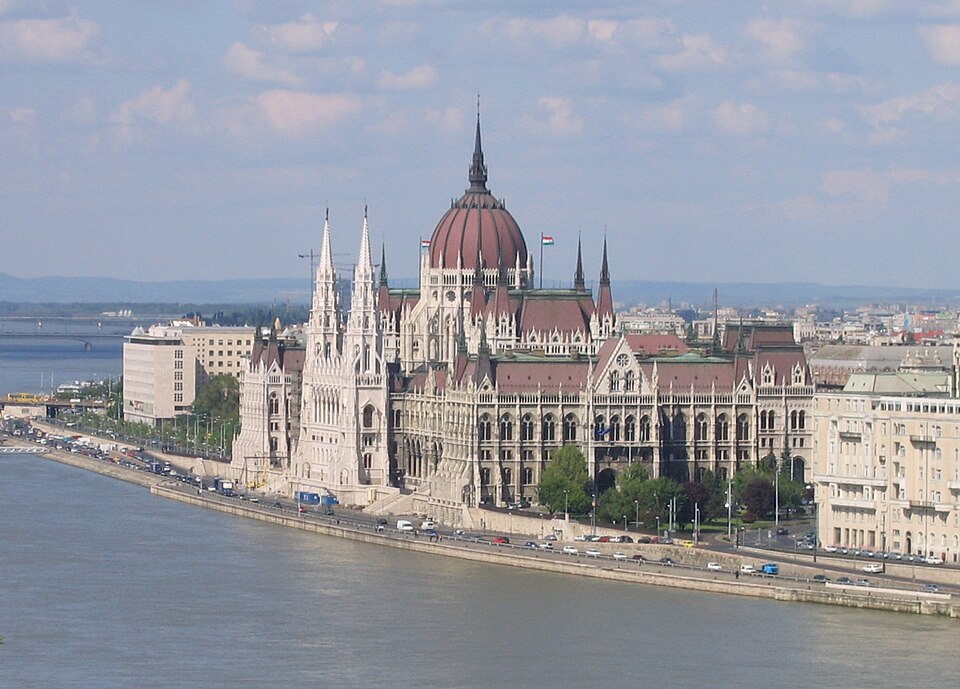
The outcome could redefine Hungary’s domestic trajectory and influence the broader political balance in Europe at a time of heightened geopolitical uncertainty. Photo by Andrew Bossi, Wikimedia commons.