
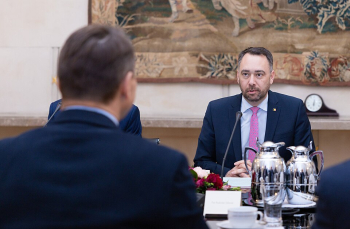









Belgium’s Foreign Minister, Maxime Prévot, sought to calm public concerns over energy security on Thursday, emphasizing that while the country currently faces no immediate
supply threat, vigilance is essential in the coming months.
Prévot clarified earlier remarks in which he had warned of a “major risk” to energy supply, stressing that Belgium’s short-term energy situation remains stable. However, he urged both the government and citizens to monitor developments closely and consider reducing fuel and gas consumption as a precaution.
“Globally, energy markets are under pressure from rising demand and potential shortages,” Prévot said. “Some countries have already implemented measures to curb energy use, and Belgium must also prepare for possible challenges to safeguard our supply.”
Rising energy costs for Belgian households
The impact of Middle East tensions on energy prices is already being felt at home. As of April 1, Belgian households on variable energy contracts are paying approximately 20% more than before the escalation of the US-Israeli-Iran conflict.
The government is reportedly considering a range of measures to mitigate rising energy costs, including potential fuel tax adjustments if prices exceed certain thresholds. Political parties are debating targeted support schemes, balancing the need for relief against the pressures on public finances.
Belgium’s diplomatic push in the Middle East
Prévot is scheduled to travel to Jordan and Lebanon next week amid growing regional instability. Belgium, alongside 14 other countries, recently issued a joint call for de-escalation in Lebanon. The statement, led by Belgium, urges Hezbollah to cease hostilities and disarm while calling on Israel to respect Lebanon’s sovereignty. The declaration also emphasizes the need for full humanitarian access in affected areas.
During his visit, Prévot plans to discuss these issues with local authorities and advocate for stronger European-level action. While he acknowledged that international pressure has so far yielded limited results, he argued that coordinated efforts by a coalition of countries could still have a meaningful impact.
Belgium’s policy on Iran
Belgium has consistently supported diplomatic engagement and sanctions enforcement as part of the EU’s approach to Iran, emphasizing nuclear non-proliferation and regional stability. The country urges restraint on all sides, discourages unilateral military actions, and encourages dialogue between Tehran and Western partners to prevent escalation. Prévot’s upcoming trip is expected to reinforce Belgium’s commitment to both regional de-escalation and energy security, highlighting the interconnection between foreign policy and domestic energy stability. Photo by Konrad Laskowski / MFA, Wikimedia commons.