











With Latvia heading toward parliamentary elections on October 3, 2026, the country’s political landscape remains fluid, fragmented, and marked by a striking level of voter
uncertainty.
According to the latest SKDS poll commissioned by Latvian Television, the opposition party *Latvia First* (LPV) continues to lead the field, capitalizing on public dissatisfaction with the current government. Meanwhile, New Unity (JV), led by Prime Minister Evika Siliņa, has suffered the sharpest decline in support among all major parties.
Yet the most telling figure may not belong to any party at all.
A nation of undecided voters
Despite months of campaigning, a significant portion of the electorate remains disengaged. In March, 26.1% of respondents said they were undecided, while 16.2% indicated they do not plan to vote at all. Combined, that leaves roughly 42% of voters without a clear political preference—an unusually high figure even by Latvia’s historically volatile standards.
Fragmented support across parties
The polling numbers show a highly competitive and fragmented political field:
- Latvia First (LPV) leads with 8.9%, slightly improving on previous figures
- The Progressives, a social democratic force within the governing coalition, follow with 6.9%
- The nationalist National Alliance (NA) stands at 6.4%
- Sovereign Power (SV), currently outside parliament, has surged to 6.2%
- New Unity (JV) trails with 5.9%, marking a notable drop in support
- The Greens and Farmers’ Union (ZZS), also part of the ruling coalition, sits just above the 5% threshold at 4.7%
If these numbers hold, as many as seven parties could enter the Saeima, reflecting Latvia’s increasingly fragmented партийная система.
Government under pressure
Analysts point to a familiar dynamic: governing parties struggling to maintain public trust amid ongoing crises. Over the past year, Latvia’s coalition has faced criticism over economic management, rising living costs, and internal disagreements on reforms.
Political scientist Jānis Ikstens notes that LPV has effectively tapped into this dissatisfaction, using anti-establishment rhetoric and populist messaging to broaden its appeal. However, its growth remains gradual rather than explosive.
Polling expert Arnis Kaktiņš adds that coalition parties traditionally find it difficult to grow support while in office—especially in Latvia, where governments are often perceived as unstable or reactive. In contrast, the Progressives appear to benefit from a more loyal voter base, helping them maintain relatively steady support.
Latvia’s political climate in 2026
The 2026 election campaign is unfolding against a complex backdrop. Latvia continues to navigate security concerns linked to regional tensions with Russia, strong support for Ukraine, and ongoing commitments within NATO and the European Union.
Domestically, economic pressures—particularly inflation and wage stagnation—remain key voter concerns. At the same time, debates over energy independence, defense spending, and social inequality are shaping party agendas.
Another defining feature of Latvia’s politics in 2026 is the rise of outsider and protest-oriented parties. Movements like *Latvia First* and *Sovereign Power* reflect a broader European trend of populist and anti-establishment forces gaining traction, particularly among voters disillusioned with traditional elites.
All to play for
With such a large share of undecided voters and relatively small differences between parties, the race remains wide open. Latvia’s proportional representation system and 5% electoral threshold mean that even small shifts in support could significantly alter the composition of the next parliament.
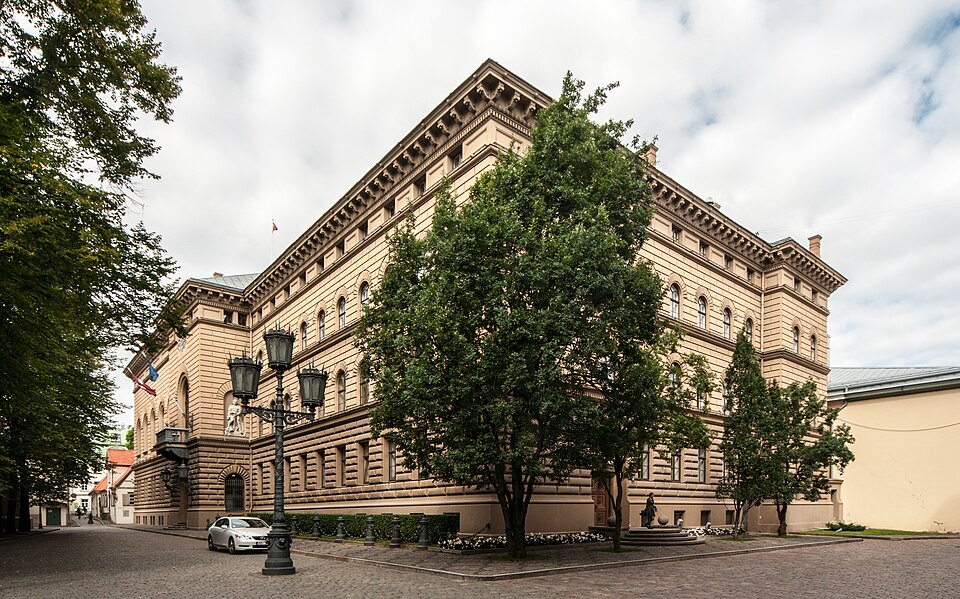
As the campaign enters its final stretch, parties face a clear challenge: mobilize an uncertain electorate—or risk being reshaped by it. Photo by © Ralf Roletschek, Wikimedia commons.