














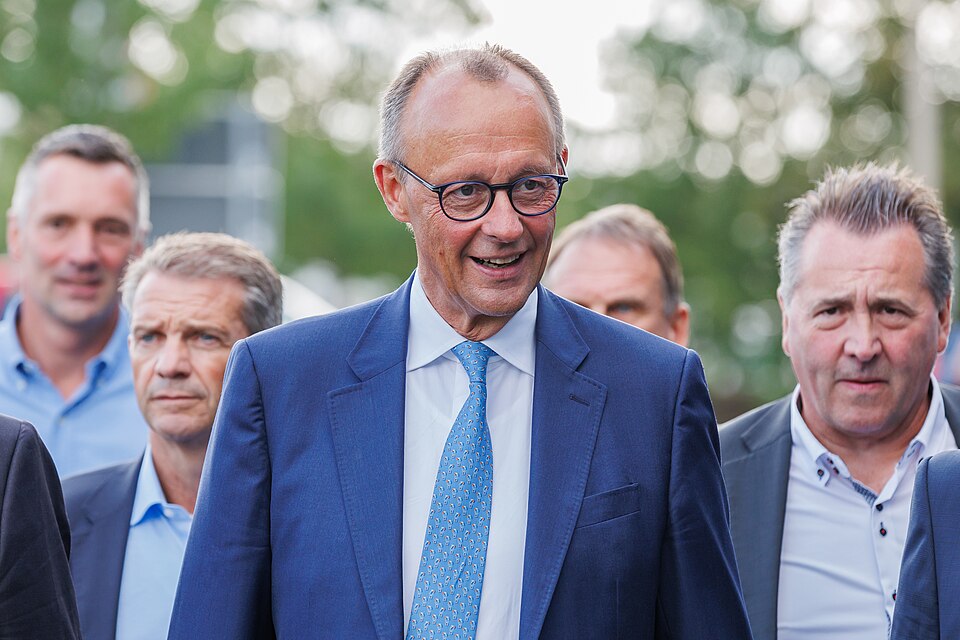
German Chancellor Friedrich Merz has called for a sweeping overhaul of the European Union’s budget framework, arguing that the bloc must redirect spending toward defence
and economic competitiveness as Europe confronts mounting geopolitical and financial pressures.
Speaking on Thursday at the Charlemagne Prize ceremony in Aachen, Merz said the EU could no longer rely on what he described as an outdated spending model dominated by subsidies and legacy programs. His remarks sharpened the debate over the EU’s next long-term budget for 2028–2034, where governments are increasingly divided over how to balance security demands with traditional funding priorities such as agriculture and regional aid.
The speech highlighted growing tensions between member states and the European Parliament over the size and direction of future EU spending. In April, lawmakers backed plans to expand the bloc’s budget beyond the levels proposed by the European Commission last year, setting the stage for difficult negotiations with fiscally conservative governments unwilling to increase national contributions.
Merz used the occasion to endorse a leaner and more targeted EU budget model focused on strategic investment.
“A sovereign Europe needs a ‘Draghi-proofed’ budget,” he said, referring to former European Central Bank President Mario Draghi, this year’s recipient of the Charlemagne Prize. Draghi warned in 2024 that Europe risked losing global competitiveness unless it accelerated investment and reform.
“Streamlined structures, investments in competitiveness and defence, a focus on European funds for European policies — all of this is necessary because resources are limited,” Merz added.
The ceremony also brought together Greek Prime Minister Kyriakos Mitsotakis, whose country endured the worst of the euro zone debt crisis during Draghi’s tenure at the ECB, when the Italian policymaker pledged to do “whatever it takes” to preserve the euro.
Merz’s comments underscored Germany’s resistance to proposals for additional joint EU borrowing, an idea promoted by French President Emmanuel Macron earlier this year as a way to strengthen Europe’s position against the United States and China.
Berlin has also rejected other European Commission revenue proposals, including levies on tobacco products and large corporate turnover.
“Some believe we can evade this painful task by taking on new debt — European debt — by financing regular spending through debt,” Merz said. “Germany cannot follow this path, if only for constitutional reasons.”
According to Merz, more than two-thirds of the EU budget is still directed toward subsidies, even as some member states spend more servicing debt than on defence.
“We cannot meet the challenges of the 21st century with a 20th-century budget,” he said. “Fundamental modernisation is therefore essential.”
He warned that excessive borrowing risked undermining Europe’s long-term sovereignty and limiting its capacity to respond to future crises. Photo by Steffen Prößdorf, Wikimedia commons.