













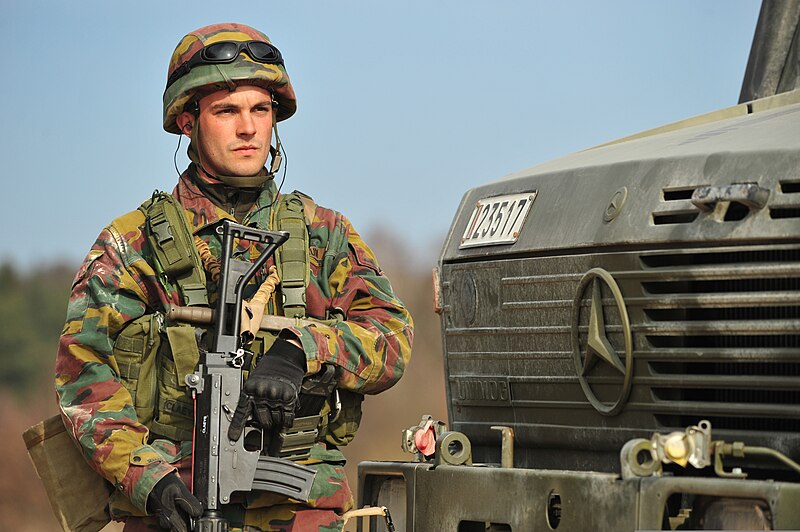
In response to a recent spate of attacks targeting Jewish sites in Europe, Belgium’s Ministry of Defence and federal police will deploy military personnel to protect synagogues and
Jewish schools across the country. The announcement was made jointly by Interior Minister Bernard Quintin and Defence Minister Theo Francken.
The decision comes after an explosion damaged a synagogue in Liège on 9 March and follows similar incidents in the Netherlands and Norway, including a fire at a synagogue in Amsterdam and an explosion at a Jewish school in Rotterdam, as well as an attack on the U.S. embassy in Norway.
“The attack in Liège underscores that the threat to Belgium’s Jewish community is real, especially against the backdrop of rising antisemitism,” Quintin said.
The military deployment is expected to begin “as soon as possible,” with operational control managed by the federal police in close coordination with the Defence Ministry. The exact number of troops to be assigned has not yet been confirmed.
Political pressure for military protection has been mounting. MR party leader Georges-Louis Bouchez called for soldiers to be deployed to Jewish sites in parliament last week, and Antwerp Mayor Els van Doesburg expressed similar concerns in the media. The Coordinating Committee of Jewish Organisations in Belgium has also urged immediate military presence to safeguard the community.
This marks the latest use of the military to support civilian security under Article 111 of the Integrated Police Act, which allows the federal police commissioner general to call upon troops for assistance. Belgium previously employed a similar strategy during Operation Vigilant Guardian in 2015, when terrorist threats prompted army involvement in protecting sensitive locations.
Justice Minister Annelies Verlinden noted that the decision had not been discussed within the government prior to the announcement but confirmed she would address the issue with both the government and federal police leadership, citing resource shortages that could affect implementation.
The move reflects Belgium’s heightened concern over antisemitic threats, amid growing unease across Europe about attacks linked to extremist networks and potential Iran-backed terrorist activity. Photo by Markus Rauchenberger, Wikimedia commons.