











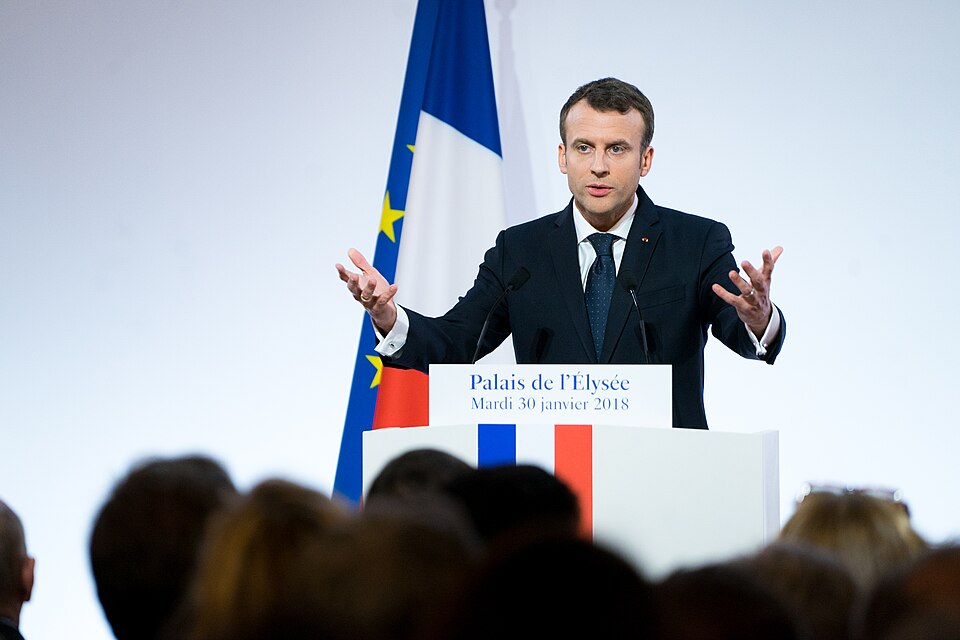
French President Emmanuel Macron’s campaign to combat online disinformation is facing stiff resistance from right-wing media outlets and political opponents, highlighting the
growing cultural and political clash over media influence in France.
In recent weeks, Macron has crisscrossed the country, warning about fake news, algorithm-driven manipulation, and foreign-backed narratives. At town hall events organized by regional newspapers, the president fielded questions from readers, framing the fight against digital falsehoods as an urgent priority ahead of the 2027 presidential election.
Yet the initiative has drawn sharp criticism from media owned by billionaire Vincent Bolloré, including CNews, Journal du Dimanche, and Europe 1 radio. The backlash followed Macron’s comments last month to La Voix du Nord, where he supported a voluntary “labelling” initiative by Reporters Without Borders to promote ethical journalism—but insisted the government itself should not determine what constitutes legitimate news.
*"It's not up to the government or the state to say: 'this is news, this isn't,'" Macron said. "Otherwise, you very quickly become an autocracy."
Right-wing outlets seized on his remarks, framing them as an attempt to control media coverage. The Journal du Dimanche accused Macron of trying to “bring into line the media who don’t think like him,” while CNews host Pascal Praud described the move as evidence of “an authoritarian drift.”
The dispute has drawn international attention. Officials from the Trump administration, critical of European social media regulations, are expected in Paris this week to emphasize their commitment to free speech and digital freedom.
Far-right politicians, including Marine Le Pen and Jordan Bardella, echoed media criticism. Le Pen told BFM TV that Macron aims to “control information,” while Bardella compared the proposal to George Orwell’s dystopian *Ministry of Truth.
In response, Macron’s office shared a video on X, pushing back against the accusations. “Pravda? Ministry of truth? When talking about the fight against disinformation sparks disinformation,” the post read.
Media historian Alexis Levrier of Reims University called the attacks “a cynical ploy.” “They cry foul over threats to freedom of expression when in opposition, yet impose censorship on dissenting voices when in power,” he said.
Macron’s efforts underscore the growing tension between government initiatives to curb disinformation and the freedom—and influence—of politically aligned media outlets in France. Photo by Jacques Paquier, Wikimedia commons.