













Algeria’s parliament has unanimously adopted a law declaring France’s colonial rule over the country a crime, a symbolic but politically charged move that deepens an already
strained relationship with Paris.
Lawmakers approved the legislation on Wednesday amid scenes of nationalist fervour, draping themselves in scarves bearing Algeria’s colours and chanting “Long live Algeria” inside the chamber.
The new law formally assigns France “legal responsibility” for the harms inflicted during its 132-year rule of Algeria, placing colonial accountability at the heart of the country’s legal and political narrative. It also calls for an official apology and reparations, arguing that compensation for both material and moral damage is an “inalienable right” of the Algerian state and its people.
Although analysts note that the legislation has no binding international force, its symbolism is significant. It marks a clear shift in how Algeria intends to confront France over colonial memory, turning long-standing grievances into a matter of state law.
Parliament Speaker Ibrahim Boughali said the vote sent “a clear message, both internally and externally, that Algeria’s national memory is neither erasable nor negotiable,” according to the state news agency APS.
The law catalogues abuses committed during French rule, including nuclear tests, extrajudicial killings, physical and psychological torture, and the systematic plundering of Algeria’s resources.
France colonised Algeria in 1830 and ruled it until independence in 1962 through a system widely documented as brutal and repressive, marked by mass killings, enforced disappearances, deportations and the marginalisation of the country’s indigenous Muslim population. Algeria estimates that 1.5 million people were killed during the war of independence between 1954 and 1962.
French President Emmanuel Macron has previously described the colonisation of Algeria as a “crime against humanity” but has repeatedly ruled out issuing a formal apology. In 2023, he said such a step was not his responsibility.
France’s foreign ministry declined to comment on the parliamentary vote, with a spokesperson saying Paris would not engage in political debates taking place in other countries.
Historians say the law’s importance lies less in its legal reach than in its political message. “It has no binding effect on France,” said Hosni Kitouni, a colonial history researcher at the University of Exeter. “But its political and symbolic significance is considerable. It represents a rupture in the way Algeria addresses its memory relationship with France.”
The vote comes amid heightened diplomatic tensions between the two countries, whose ties remain closely linked through migration and economic interests. Relations have deteriorated in recent months, particularly after France backed Morocco’s autonomy plan for Western Sahara in July 2024 — a move strongly opposed by Algeria, which supports the Sahrawi people’s right to self-determination and backs the Polisario Front.
Tensions escalated further in April when an Algerian diplomat and two Algerian nationals were arrested in Paris, triggering a diplomatic crisis just days after President Macron and Algerian President Abdelmadjid Tebboune had pledged to revive dialogue.
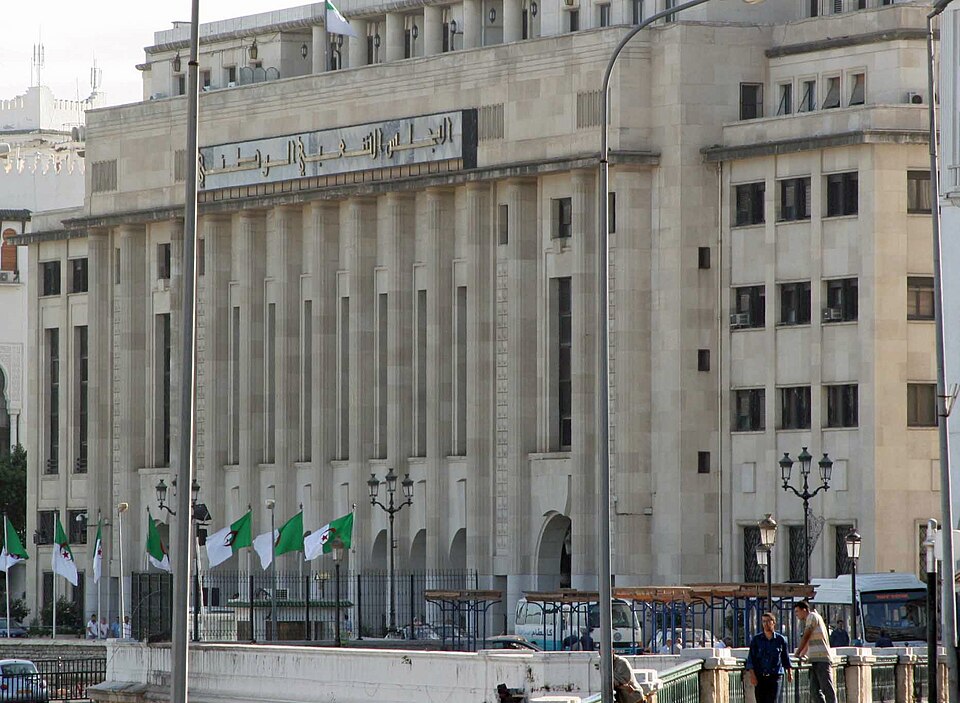
With the passage of this law, Algeria has signalled that questions of colonial memory and accountability will remain central — and contentious — in its dealings with France. Photo by Magharebia, Wikimedia commons.