















The euro and the US dollar continue to battle for dominance in the European Union’s international trade landscape. New data for 2025 reveals a fragmented market where the
currency of choice depends entirely on what is being shipped: primary goods or the energy that powers them.
The Euro's stronghold: primary goods
In the realm of primary goods (excluding petroleum), the euro has successfully maintained its lead. Accounting for 47.4% of extra-EU imports, the single currency narrowly edged out the US dollar, which held a 45.0% share.
The preference for the euro becomes even more pronounced when looking at exports. EU businesses showed a clear partiality for their home currency, using it for 62.2% of primary good exports, leaving the dollar trailing at just 22.9%.
The "Petrodollar" persistence
Despite the euro's gains in general trade, the US dollar remains the undisputed king of the energy sector. The 2025 figures highlight a staggering reliance on the dollar for energy imports:
Petroleum Imports: The US dollar commanded a massive 86.7% share.
Petroleum Exports: While slightly less dominant, the dollar still accounted for 70.1% of transactions.
The euro’s presence in this sector remains secondary, capturing only 12.9% of imports and 27.5% of exports, illustrating the enduring global standard of pricing oil in greenbacks.
Manufactured Goods: A Tight Race
The competition is most visible in the manufactured goods sector, where the two currencies are nearly neck-and-neck for imports. The US dollar currently holds a slight advantage at 46.2%, compared to the euro's 43.3%.
However, the tide turns when European factories ship their finished products abroad. For manufactured exports, the euro reclaimed the majority with a 50.4% share, while the dollar settled at 32.4%.
2025 Trade Currency Breakdown (Imports)
|
Good Category |
Euro (€) |
US Dollar ($) |
Other Currencies |
|
Primary Goods (ex. Petrol) |
47.4% |
45.0% |
7.0% |
|
Petroleum Products |
12.9% |
86.7% |
0.3% |
|
Manufactured Goods |
43.3% |
46.2% |
10.2% |
The Bottom Line: While the euro is the preferred vehicle for European exports and general primary goods, the "Petrodollar" remains a formidable barrier to total currency autonomy in the EU's energy trade.
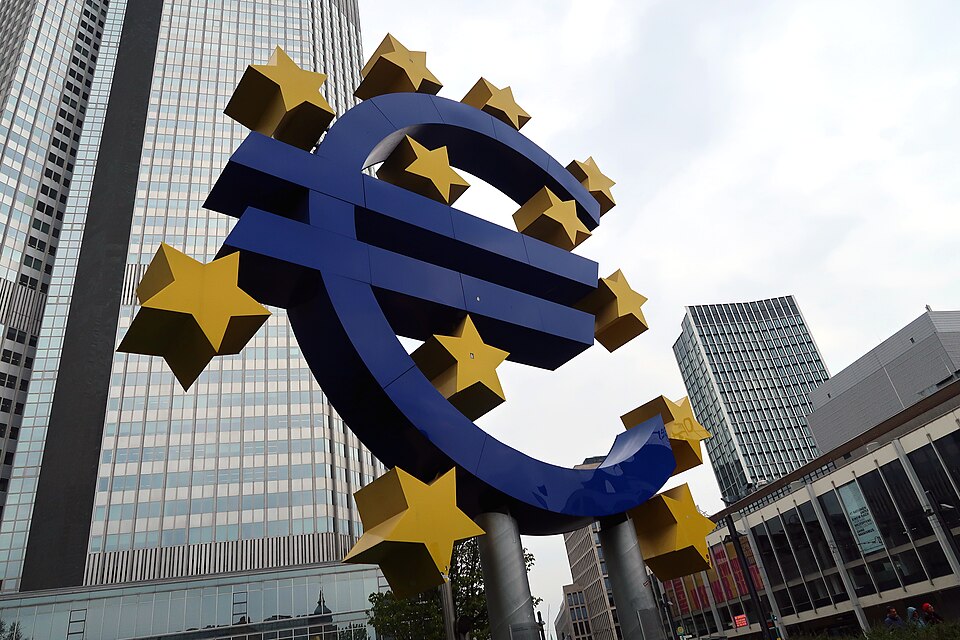
Which sector do you think will be the next "battleground" for euro adoption in international contracts? Photo by Ra'ike (Wikipedia), Wikimedia commons.