












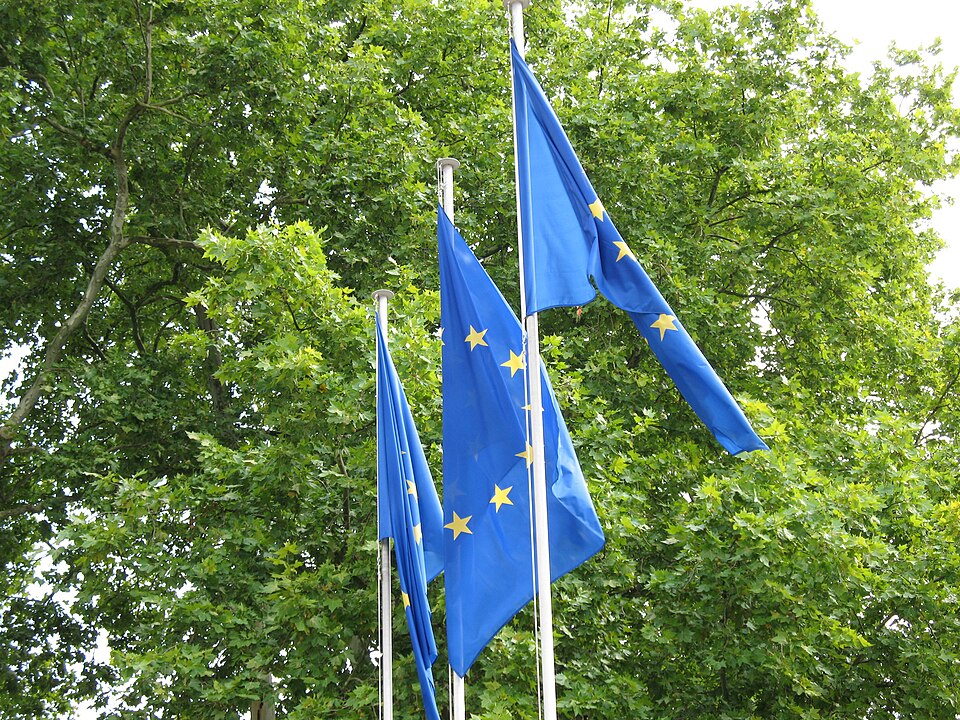
Nearly three out of four Europeans believe their country has benefited from membership in the European Union, according to the latest Eurobarometer survey released ahead of
Europe Day, underscoring growing public confidence in the bloc during a period of geopolitical uncertainty.
The survey reveals that 73% of Europeans view the EU as a stabilising force in an increasingly volatile world, while support for a common European defence and security policy has climbed to 81% — matching the highest level recorded in the past two decades.
A record 75% of respondents said they feel like citizens of the European Union, equalling the highest figure ever measured.
The findings come as Europe faces mounting international pressures, including Russia’s ongoing war in Ukraine, instability in the Middle East, and global economic uncertainty. Public backing for stronger international partnerships is also rising, with 80% of Europeans supporting more diversified trade ties and 79% favouring closer cooperation with countries outside the EU.
Strong backing for Ukraine support
Support for the EU’s response to Russia’s invasion of Ukraine remains robust. More than three quarters of respondents said the war poses a direct threat to EU security.
The survey found overwhelming support for key EU measures, including welcoming refugees fleeing the conflict (80%), providing humanitarian and financial assistance (75%), and maintaining sanctions against Russia (70%).
Overall, 76% of Europeans believe the EU should continue supporting Ukraine until a “just and lasting peace” is achieved. Meanwhile, 57% support Ukraine’s EU candidate status and 56% approve of EU financing for military equipment supplied to Kyiv.
Trust in the EU rises
Public trust in the European Union has also strengthened, reaching 51% across the bloc — three percentage points higher than in the previous survey.
The sharpest increases were recorded in France, Denmark and Portugal. Young Europeans aged 15 to 24 expressed the highest levels of trust, at 61%.
Respondents cited the protection of democracy and fundamental rights as the leading reason for trusting the EU, followed by protection against external threats and confidence in the bloc’s ability to tackle global challenges.
Optimism about the EU’s future remains steady, with 60% expressing a positive outlook. Satisfaction with how democracy functions within the EU also remains relatively high at 57%.
Peace, democracy and the rule of law were identified as the values most strongly associated with the European Union.
Cost of living remains a major concern
Despite growing confidence in the EU, economic pressures continue to weigh heavily on citizens.
The cost of living remains the dominant concern both personally and nationally, cited by 52% and 36% of respondents respectively.
At the European level, concerns are increasingly shaped by global conflicts. The situation in the Middle East ranked as the top issue facing the EU, followed by broader international instability and the war in Ukraine.
The survey also highlighted shifting global perceptions. Negative views of the United States rose sharply to 74%, up 14 percentage points from the previous survey. China and Russia also continue to be viewed unfavourably by large majorities of Europeans, while India received comparatively more positive ratings.
Support for the euro remains high
Backing for the euro remains near record levels, with 74% of Europeans supporting the common currency. Support is even stronger within eurozone countries, where 82% favour the euro.
In Bulgaria, the newest euro area member, support for the currency rose significantly, increasing by 13 percentage points to 55%.
However, Europeans remain cautious about the economic outlook. While 44% consider the EU economy to be in good condition, only 15% expect it to improve over the next year, compared with 36% who anticipate deterioration.
When asked about spending priorities for the EU budget, citizens placed employment, social affairs and public health at the top of the list, followed by security and defence, and education and youth programmes.
The Standard Eurobarometer 105 survey was conducted between 12 March and 5 April 2026 across all 27 EU member states, with more than 26,000 citizens interviewed face-to-face. Photo by Elwood j blues, Wikimedia commons.