











On December 2, 2025, the University of Graz presented for the first time a comprehensive evaluation of how the governing parties ÖVP, SPÖ, and NEOS have implemented their
election promises since the 2024 National Council election. The result is clear: so far, 19 percent of the promises have been realized.
Around 14 months after the election and nine months after the swearing-in of the federal government, the research team led by political scientist Katrin Praprotnik drew its first conclusions. Of the total 1,674 election promises analyzed, 14 percent have been fully implemented and 5 percent partially implemented — a total of 19 percent.
“With the Policy Monitor, the University of Graz demonstrates impressively how academic expertise can make a concrete contribution to strengthening our democracy. Through the independent analysis of political election promises and their implementation, we not only create greater transparency but also promote citizens’ trust in democratic decision-making processes,” said Rector Peter Riedler at the presentation of the report.
“The implementation of election promises has begun, but the first assessment by the Policy Monitor shows above all that there is still a long list of open issues,” Katrin Praprotnik summarized the findings.
Major differences
The differences between the parties are striking. As the chancellor’s party, the ÖVP was able to fully implement 20 percent of its promises and partially implement a further 5 percent — a total of 25 percent. The ÖVP benefits here from its participation in government during the previous legislative period, as it frequently promised to maintain the status quo (for example, no inheritance tax). According to the Policy Monitor, NEOS reaches 17 percent (10 percent fully implemented), while the SPÖ ranks last with a total of 12 percent (8 percent fully implemented).
The influence of the coalition agreement is clearly visible: around one quarter of the election promises that were fully or partially included in the government program have at least begun to be implemented. In terms of content, it is striking that although social policy played a central role in the election campaign, its implementation rate so far remains below average at only seven percent. Higher implementation rates can be observed in the areas of infrastructure (26 percent at least partially implemented), Europe (18 percent), and society and migration (both 17 percent).
By way of example, the Policy Monitor cites the implementation of the partial pension introduced by ÖVP and NEOS, while other promises such as the degressive unemployment benefit (ÖVP) or the basic child benefit (SPÖ) have not yet been implemented.
Project profile
The Policy Monitor is scientifically led at the University of Graz by Katrin Praprotnik. Together with her team, she evaluates election programs and governmental activities using manual quantitative and qualitative content analysis. The aim of the project is to bring transparency to political processes and thus contribute to a more nuanced public debate.
All further information and the full results of the analysis can be found at bilderpool.uni-graz.at/s/33ca5gej43fpa and www.politikmonitor.at
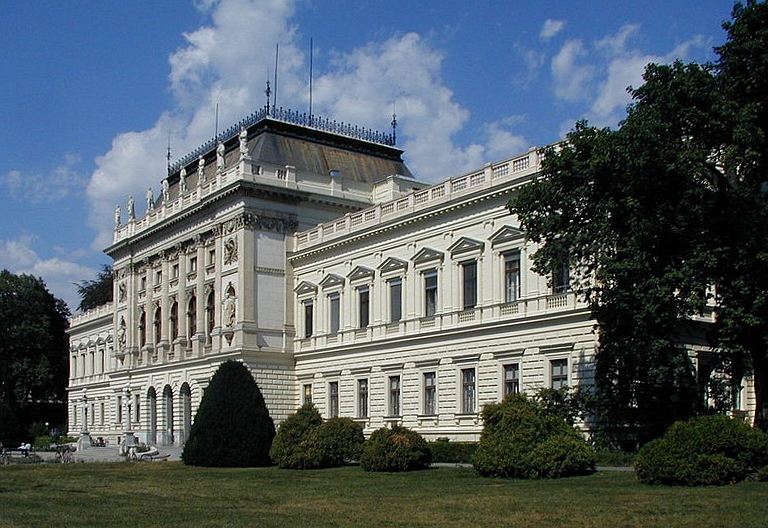
With this project, the University of Graz once again positions itself as an independent, scientifically grounded observer of democratic processes. The Policy Monitor regularly receives widespread media and public attention and exemplifies how university research assumes responsibility and addresses key issues of our time. Photo by de:user:Dr. Marcus Gossler, Wikimedia commons.