














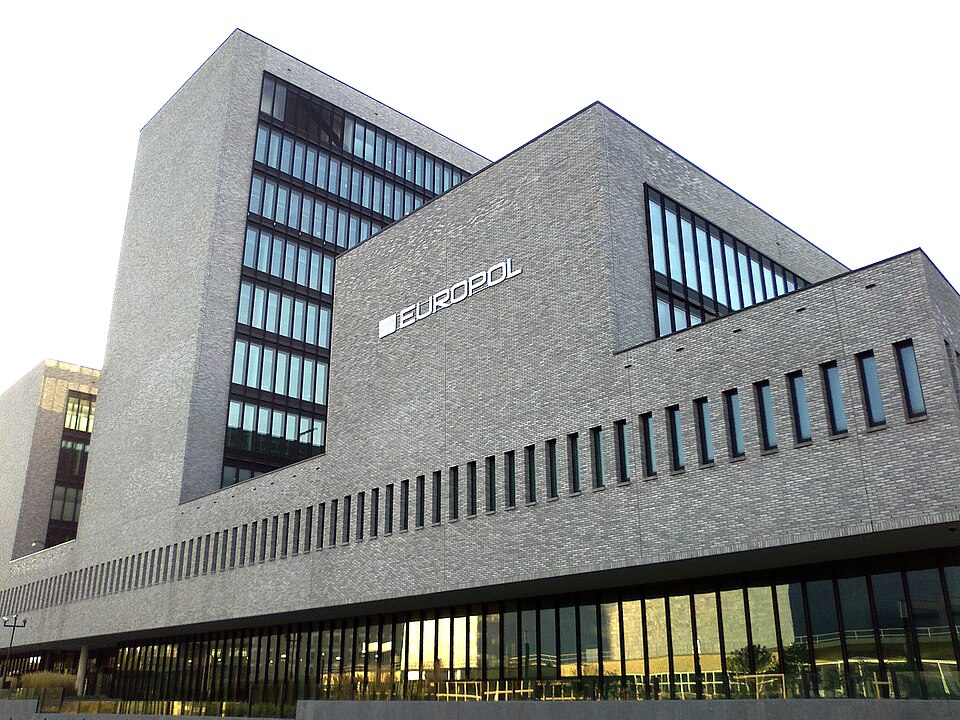
Europe’s law enforcement agency, Europol, has issued a stark warning that escalating tensions in the Middle East could significantly increase security risks across the European
Union, including terrorism threats, cyberattacks, and organized crime activity.
In comments to the Spanish news agency EFE, Europol officials said the ongoing conflict involving the United States, Israel, and Iran is already influencing Europe’s security landscape.
For six consecutive days, U.S. and Israeli forces have carried out strikes against targets in Iran. During the initial wave of attacks on Saturday, Iran’s Supreme Leader, Ayatollah Ali Khamenei, was reportedly killed. Since then, Iranian forces have launched retaliatory strikes targeting U.S. military bases and other facilities across the Middle East, raising fears of a broader regional escalation.
According to Europol’s counter-terrorism director, Jan Op Gen Oorth, groups linked to Iran could attempt to carry out destabilizing operations inside the European Union. These could range from intimidation campaigns and influence operations to potential terrorist acts. He also warned that critical infrastructure across Europe may face a wave of cyberattacks as tensions spill into the digital domain.
Authorities are particularly concerned about the possibility of cyber warfare targeting key services. Energy networks, financial institutions, healthcare systems, and government infrastructure could all become potential targets if the conflict intensifies.
In the Netherlands, the National Coordinator for Security and Counterterrorism (NCTV) has kept the national threat level at 4 – “substantial.” This classification means authorities consider a terrorist attack a realistic possibility, driven by factors such as online radicalization and potential covert operations by Iranian networks.
Dutch Justice and Security Minister David van Weel said the government is closely monitoring possible activities by Iranian intelligence services, as well as the growing risk of cyberattacks targeting essential infrastructure.
Security experts say cyber threats may come from both state-linked actors and pro-Iranian hacker groups. One such network, calling itself the “Islamic Cyber Resistance,” has reportedly encouraged cyberattacks against Western countries. Because of its alliance with Washington, the Netherlands could face digital threats including distributed denial-of-service (DDoS) attacks and destructive malware designed to wipe data from systems.
Other European countries are also taking precautionary measures. Governments in France, Germany, and several other EU states have increased security monitoring and protective measures in response to the rising tensions.
Despite the heightened alert, officials emphasize that there is currently no confirmed intelligence indicating an imminent attack within Europe. However, judicial and security sources caution that the situation remains highly volatile.
Europol has assessed the overall threat of terrorism and violent extremism within the European Union as “high.” Authorities say potential risks could come from lone actors radicalized online as well as small, self-directed extremist cells capable of launching attacks with little warning.
As the conflict in the Middle East continues to unfold, European security agencies are urging governments and critical infrastructure operators to remain vigilant, warning that geopolitical crises abroad often have direct security consequences at home. Photo by OSeveno, Wikiedia commons.