













Belgium has emerged as the eurozone’s weakest fiscal performer in 2025, posting the bloc’s largest budget deficit and intensifying a growing political debate over government
spending priorities.
According to new data from the International Monetary Fund, Belgium’s deficit climbed to 5.3% of gross domestic product, surpassing France, where the shortfall eased slightly to 5.1%. The eurozone average remains far lower at around 3%, broadly aligned with European Union fiscal rules.
The outlook offers little immediate relief. Projections suggest Belgium’s deficit will remain above 5% through 2026 and 2027 if current policies stay unchanged, leaving the country under sustained pressure from both markets and European institutions.
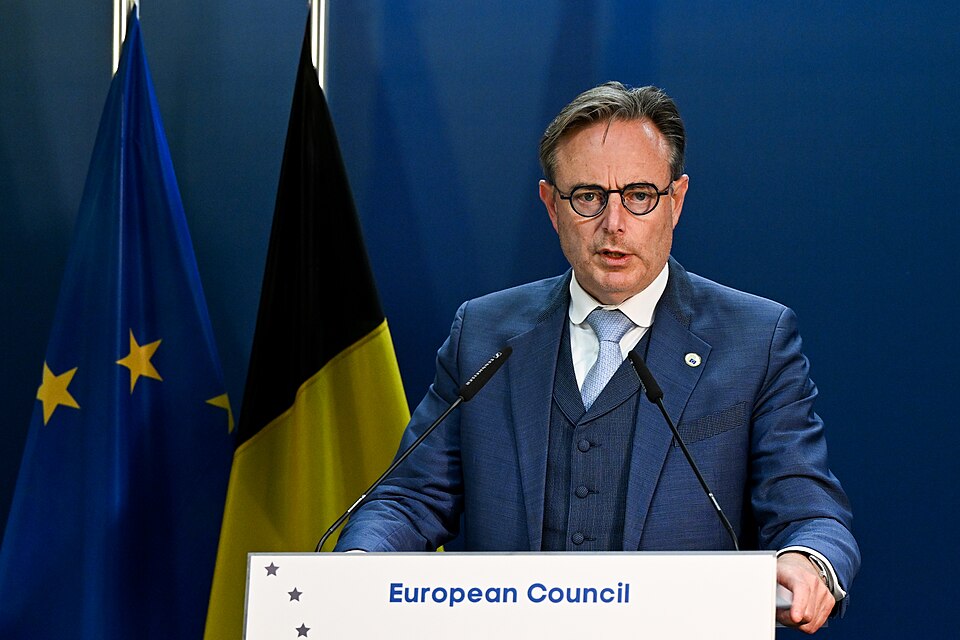
Prime Minister Bart De Wever has used the deteriorating fiscal position to justify a cautious approach to new spending. In particular, he has resisted calls for broad energy support measures, arguing that Belgium simply lacks the budgetary room to expand aid without risking further imbalance.
However, that stance is increasingly contested within the ruling coalition. Several parties are pushing for targeted support to help households and businesses cope with persistently high energy costs. The disagreement has exposed fractures within the government at a time when fiscal credibility is already under scrutiny.
Earlier estimates from Belgium’s Monitoring Committee indicated that nearly €4.9 billion in additional savings or new revenues would be required just to meet European budgetary rules—underscoring the scale of the challenge.
Tensions escalated further as the liberal Mouvement Réformateur signaled it could obstruct government decision-making if no agreement is reached. Party leader Georges-Louis Bouchez has been particularly outspoken, framing energy support as a political necessity despite the tight fiscal environment.
Economic backdrop in 2025
Belgium’s fiscal struggles come against a mixed economic backdrop. Growth in 2025 has remained modest, constrained by weak industrial output and softer demand from key trading partners such as Germany and France. Inflation has eased compared to the peaks of previous years but continues to weigh on household purchasing power, particularly through energy and housing costs.
The country’s high public debt—hovering around 105% of GDP—limits flexibility compared to some eurozone peers. At the same time, Belgium’s economy retains structural strengths, including a strong services sector, a central role in European logistics, and resilient employment levels. However, competitiveness concerns and rising wage costs continue to challenge exporters.
Credit rating agencies are now closely monitoring Belgium’s fiscal trajectory. Moody’s is expected to release an updated assessment shortly, while official EU budget figures are due in the coming days—both likely to influence market sentiment and future policy decisions.
As Belgium navigates the competing demands of fiscal discipline and social support, the government faces a narrowing path forward, with political cohesion and economic stability both at stake. Photo by © European Union, 1998 – 2026, Wikimedia commons.