














Poland is set to restart domestic tank production for the first time in nearly two decades after state-owned defence manufacturer Bumar-Łabędy signed a key agreement with
South Korea’s Hyundai Rotem.
The deal, finalized on Monday, lays out how work and funding will be divided under a broader 2025 contract covering the purchase of 180 K2 main battle tanks and 81 accompanying support vehicles. Crucially, part of that production will now take place on Polish soil.
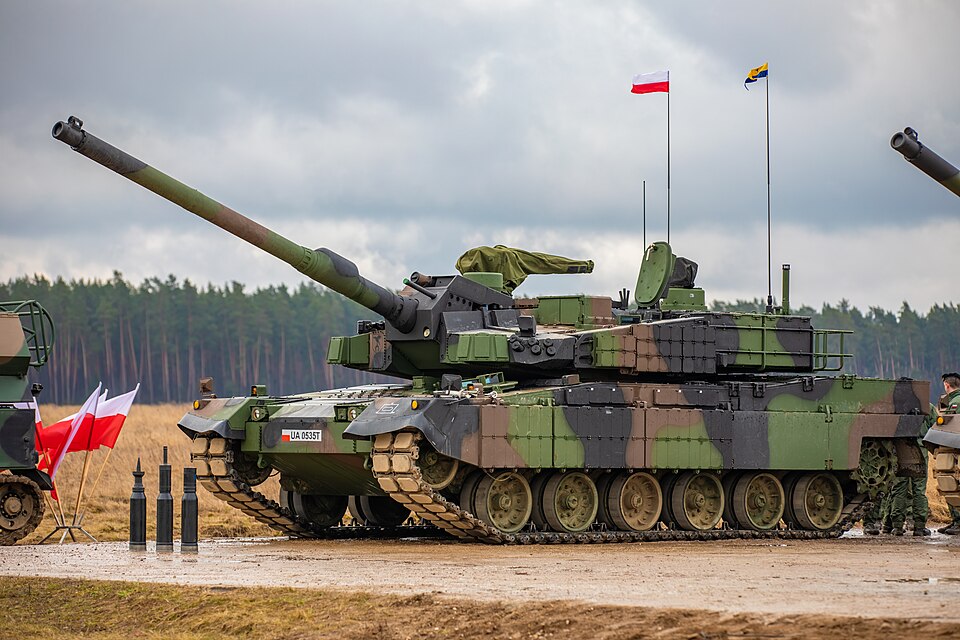
Under the agreement, Bumar-Łabędy will assemble 61 tanks in the customized K2PL configuration, along with 72 support vehicles. The first unit is expected to leave the production line in Gliwice in 2028—marking Poland’s return to domestic tank manufacturing since the last PT-91M Twardy was completed in 2009.
Hyundai Rotem CEO Yong-bae Lee described the partnership as a cornerstone of the K2PL programme, highlighting its role in transferring advanced technology and building modern industrial capacity in Poland. He emphasized that the collaboration goes beyond delivering equipment, aiming instead to establish long-term expertise and a durable Polish-Korean defence partnership.
The agreement also includes cooperation with other firms within Poland’s state defence group Polska Grupa Zbrojeniowa. Subsidiaries such as Wojskowe Zakłady Elektroniczne and PCO will contribute key systems, including navigation and driver imaging technology.
Deputy State Assets Minister Konrad Gołota welcomed the agreement, calling it both a revival of Poland’s tank-building capability and a “generational leap” for the national arms industry.
A broader military buildup
The deal is part of Poland’s wider military expansion, accelerated after Russia’s full-scale invasion of Ukraine in 2022. That year, Warsaw signed an initial agreement for K2 tanks, with the first batch—180 units—manufactured entirely in South Korea and already delivered.
A second contract signed in 2025 includes another 180 tanks, with a significant portion to be produced domestically in the K2PL variant. Future phases could see Poland acquire up to 1,000 K2 tanks in total, more than half of them built at home.
Beyond tanks, Poland has deepened defence ties with Seoul, purchasing K239 Chunmoo rocket systems, K9 howitzers, and FA-50 fighter jets—some also slated for local production.
At the same time, Warsaw is working to reduce reliance on foreign suppliers by expanding its own defence industry. Recent initiatives include ammunition production partnerships with US and UK firms, missile manufacturing agreements, and joint ventures with Estonia and Ukraine.
According to recent data, Poland has been NATO’s largest arms importer over the past five years, with nearly half of its equipment sourced from South Korea and a significant share from the United States. However, agreements like the K2PL programme signal a clear shift toward building long-term domestic capacity.
By the end of the decade, Poland is expected to field around 1,100 tanks—potentially surpassing the combined totals of several major Western European militaries. Photo by Staff Sgt. Matthew Foster, Wikimedia commons.