










Former French Prime Minister Gabriel Attal has officially entered the race for the French presidency, setting up a high-stakes battle for centrist voters ahead of next year’s election
and intensifying concerns that political fragmentation could benefit candidates on the far right and far left.
Attal, 37, announced his candidacy on Friday during a visit to the village of Mur-de-Barrez in central France, where he pledged to restore ambition and confidence to French politics.
“I’m tired of politics being reduced to managing decline,” Attal told reporters. “I want France to become the leading power in Europe.”
One of the most prominent faces of President Emmanuel Macron’s administration, Attal rose rapidly through government ranks, gaining national visibility as spokesperson during the COVID-19 pandemic before becoming France’s youngest-ever prime minister. His tenure lasted only seven months after Macron dissolved parliament and called snap elections — a move Attal reportedly opposed, straining relations between the two men.
Now leading Macron’s Renaissance party, Attal enters the presidential race with the backing of a well-funded political machine and a strong national network. But analysts say his close association with Macron, whose popularity has waned in recent years, could limit his appeal among voters seeking political change.
Attal also faces a major challenge within the centrist camp itself, particularly from former Prime Minister Edouard Philippe, who has spent months positioning himself as the leading moderate alternative.
Recent polling suggests Philippe currently holds the advantage, with support levels reaching up to 25% in first-round voting scenarios, compared with around 14% for Attal. Philippe, now mayor of Le Havre, is viewed by many moderates as the strongest contender capable of confronting the far-right National Rally.
The growing number of centrist candidates has heightened fears among mainstream political figures that the moderate vote could splinter, paving the way for a second-round showdown between political extremes.
Such a scenario could see the far right — represented by either Jordan Bardella or Marine Le Pen — facing hard-left leader Jean-Luc Mélenchon in the presidential run-off.
Attal recently revealed he has held discussions with Philippe about preventing such an outcome. The two politicians have reportedly agreed to reassess by early 2027 which candidate is better positioned to unite centrist voters and whether one should withdraw to avoid dividing support.
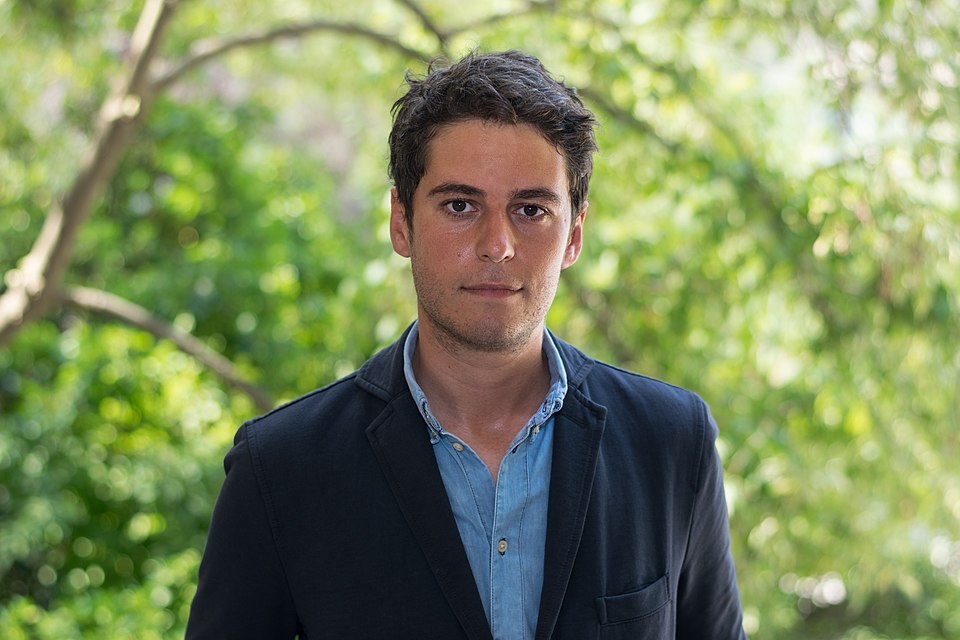
Beyond electoral strategy, the rivalry also reflects two sharply contrasting political styles. Philippe has cultivated a reserved and disciplined public image, while Attal has embraced a more personal and media-focused approach aimed at energizing younger and moderate voters. Photo by Antoine Lamielle, Wikimedia commons.