












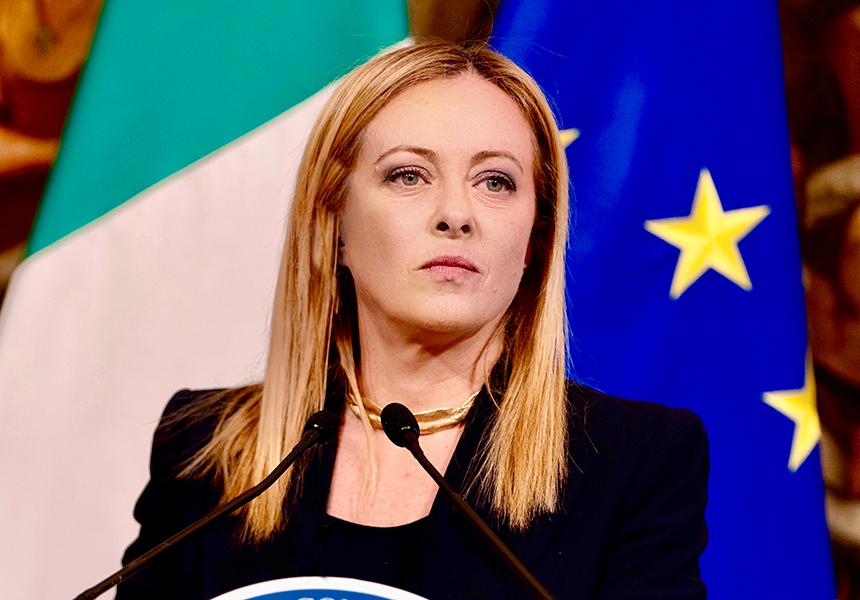
More than six million Italians have taken part in local elections across 749 municipalities, in a closely watched vote widely seen as an early political test for Prime Minister Giorgia
Meloni and her right-wing governing coalition.
Polling stations reopened on Monday after Sunday’s first round of voting, marking the final major electoral challenge before Italy’s next general election, expected in 2027. The contest will determine mayors and municipal councils in hundreds of towns and cities, including the major urban centre of Venice and 15 provincial capitals.
Initial figures indicate turnout of around 46.5%, slightly lower than the 50.1% recorded in the previous comparable local elections, according to local reports.
A potential second round is scheduled for 7–8 June in municipalities with more than 15,000 residents. On the same dates, voters in Sardinia will also return to the polls in 149 municipalities, with run-offs there set for 21–22 June where necessary.
The cities involved in this round include Venice and provincial capitals such as Andria, Agrigento, Arezzo, Avellino, Chieti, Crotone, Enna, Fermo, Lecco, Macerata, Mantua, Messina, Pistoia, Prato, Reggio Calabria, Salerno, and Trani.
Political pressure after referendum defeat
The elections come at a sensitive moment for the government, following its defeat in March’s referendum on judicial reform—a result that weakened the perception of invulnerability surrounding Meloni’s leadership.
As the last nationwide electoral test before 2027, the local vote is being closely read as a measure of the government’s durability and its continued support across different regions of the country.
For the governing coalition, the outcome could either reinforce confidence in its electoral base or raise new concerns about momentum heading into the next general election.
At the same time, the results will be closely analysed by the opposition “broad camp,” which remains fragmented and uneven across the country. In several municipalities, alliances vary significantly: in some areas centrist forces have aligned with the right, while in others the centre-left remains divided, complicating efforts to present a unified alternative.
Key battleground cities
The most significant political battles are taking place in 118 municipalities with more than 15,000 inhabitants, where control is being contested between the two main political blocs in a series of symbolic and strategic strongholds.
In Venice, the centre-left is attempting to reclaim the city after a decade of centre-right leadership. In Reggio Calabria, the dynamic is reversed, with the centre-right hoping to make gains after years under centre-left administration.
Other closely watched contests include Crotone and Salerno, where independent civic candidacies and internal divisions within the progressive camp are adding further unpredictability.
Analysts say outcomes in these pivotal cities could ultimately determine which coalition claims the stronger national narrative, and whether the vote is interpreted as confirmation of stability—or a warning sign—for Italy’s political direction ahead of 2027. Photo by Italian Government, Wikimedia commons.