






Latest News

EU employment hits new high as labour market tightens in early 2026

EU employment hits new high as labour market tightens in early 2026 EU employment hits new high as labour market tightens in early 2026
  The European Union's labour market continued to strengthen in the first quarter of 2026, with employment reaching a new high while overall...
Read More...

Social media adoption climbs across EU firms, led by Nordic and Baltic frontrunners

Social media adoption climbs across EU firms, led by Nordic and Baltic frontrunners Social media adoption climbs across EU firms, led by Nordic and Baltic frontrunners
  According to new data published by Eurostat, social media has become a standard tool for business communication across the European...
Read More...

Sweden retreats from plan to jail 13-year-olds as it moves to toughen youth crime laws

Sweden retreats from plan to jail 13-year-olds as it moves to toughen youth crime laws Sweden retreats from plan to jail 13-year-olds as it moves to toughen youth crime laws
  Sweden has abandoned a proposal to allow the imprisonment of 13-year-old offenders after failing to secure sufficient parliamentary...
Read More...

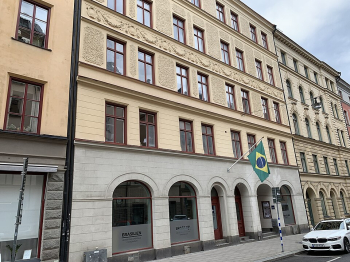
EU and Brazil elevate digital cooperation with new strategic partnership signed in Brasília

EU and Brazil elevate digital cooperation with new strategic partnership signed in Brasília EU and Brazil elevate digital cooperation with new strategic partnership signed in Brasília
The European Union and Brazil are set to deepen their long-standing digital relationship today with the formal signing of a Digital Partnership...
Read More...

Germany and France abandon flagship joint fighter jet programme after years of deadlock

Germany and France abandon flagship joint fighter jet programme after years of deadlock Germany and France abandon flagship joint fighter jet programme after years of deadlock
Germany and France have decided to terminate their flagship joint effort to develop a next-generation fighter aircraft, marking the collapse...
Read More...

Five EU founding states push for tighter controls on voting rights in future enlargement

Five EU founding states push for tighter controls on voting rights in future enlargement Five EU founding states push for tighter controls on voting rights in future enlargement
  A group of five founding members of the European Union — Belgium, the Netherlands, Luxembourg, France and Germany — are calling for...
Read More...

Must Read

Most Popular Stories

VIDEO AND audio news:

Features, views, analysis

business

Latest News

EU employment hits new high as labour market tightens in early 2026

EU employment hits new high as labour market tightens in early 2026 EU employment hits new high as labour market tightens in early 2026
  The European Union's labour market continued to strengthen in the first quarter of 2026, with employment reaching a new high while overall...
Read More...

Social media adoption climbs across EU firms, led by Nordic and Baltic frontrunners

Social media adoption climbs across EU firms, led by Nordic and Baltic frontrunners Social media adoption climbs across EU firms, led by Nordic and Baltic frontrunners
  According to new data published by Eurostat, social media has become a standard tool for business communication across the European...
Read More...

Sweden retreats from plan to jail 13-year-olds as it moves to toughen youth crime laws

Sweden retreats from plan to jail 13-year-olds as it moves to toughen youth crime laws Sweden retreats from plan to jail 13-year-olds as it moves to toughen youth crime laws
  Sweden has abandoned a proposal to allow the imprisonment of 13-year-old offenders after failing to secure sufficient parliamentary...
Read More...

EU and Brazil elevate digital cooperation with new strategic partnership signed in Brasília

EU and Brazil elevate digital cooperation with new strategic partnership signed in Brasília EU and Brazil elevate digital cooperation with new strategic partnership signed in Brasília
The European Union and Brazil are set to deepen their long-standing digital relationship today with the formal signing of a Digital Partnership...
Read More...

Germany and France abandon flagship joint fighter jet programme after years of deadlock

Germany and France abandon flagship joint fighter jet programme after years of deadlock Germany and France abandon flagship joint fighter jet programme after years of deadlock
Germany and France have decided to terminate their flagship joint effort to develop a next-generation fighter aircraft, marking the collapse...
Read More...

Five EU founding states push for tighter controls on voting rights in future enlargement

Five EU founding states push for tighter controls on voting rights in future enlargement Five EU founding states push for tighter controls on voting rights in future enlargement
  A group of five founding members of the European Union — Belgium, the Netherlands, Luxembourg, France and Germany — are calling for...
Read More...

Must Read

Most Popular Stories


EU lawmakers and member states have reached a provisional agreement on sweeping changes to the bloc’s rules on the return of non-EU nationals staying illegally in the

European Union, aiming to speed up procedures while tightening enforcement and limiting irregular secondary movements within the Schengen area.

The deal, negotiated between the European Parliament and the Council of the EU under a proposal put forward by the European Commission in March 2025, introduces stronger obligations for individuals subject to return decisions, expanded use of detention in specific cases, and new mechanisms for cooperation with third countries.

Faster returns and stronger obligations to leave

Under the agreed framework, third-country nationals issued a return decision by national authorities will be required to leave the EU country concerned immediately or within a set deadline. Those affected will also have a legal obligation to cooperate with authorities throughout the return process.

The reforms aim to streamline procedures while ensuring compliance with fundamental rights and international law, and to prevent absconding or movement between member states after a return order has been issued.

Detention and alternatives to prevent absconding

Authorities will be allowed to detain individuals on a case-by-case basis to prepare for return, particularly where there is a risk of absconding, non-cooperation, or a potential security threat. Detention decisions must be issued by a judicial or administrative authority.

The maximum detention period is set at up to 24 months, with a possible six-month extension under specific circumstances, such as new evidence emerging or improved cooperation with third countries. If an individual moves to another EU member state, a new detention period may be initiated where legal grounds exist.

Member states may also apply alternatives to detention, including financial guarantees, regular reporting obligations, residence requirements in designated locations, or electronic monitoring.

Detention of unaccompanied minors and families with children will remain possible only as a last resort and for the shortest appropriate period, based on the best interests of the child.

Cooperation with third countries and “return hubs”

The agreement also opens the door for transfers of returnees—excluding unaccompanied minors—to third countries willing to accept them under bilateral arrangements, often referred to as “return hubs.”

Such arrangements will only be permitted with countries deemed to respect human rights, international law, and the principle of non-refoulement. Member states will be required to inform the European Commission and other EU countries before such agreements take effect.

EU-wide enforcement of return orders

Return decisions will be integrated into a “European return order” system and shared across the Schengen area via the Schengen Information System. This is intended to improve coordination and enforcement across borders.

Member states will have the option to recognise and enforce return decisions issued by another EU country, or to issue their own national decisions based on the shared order. The European Commission will review the system within two years and may propose further reforms, including mandatory mutual recognition of return decisions across the EU.

Next steps

The regulation will enter into force after formal publication. Some provisions—such as those relating to return hubs, age assessments for minors, and external cooperation—will apply immediately. Others requiring administrative preparation will take effect 12 months later.

Quote

Rapporteur Malik Azmani (Renew, Netherlands) said: “After nearly two decades, the EU's rules on returns were overdue for reform. Our goal was clear: an effective, fair and workable return system, ensuring a legally sound text. We took our responsibility and worked intensively for a compromise. We had excellent cooperation with the Commission and the Council. The last outstanding issue under discussion was the rules’ entry into force. For the Parliament, a swift entry into force was essential, and we fought hard to secure this. The most important is that Europe delivers a system that is both credible and workable in practice”

deneme