













Renewable energy accounted for a record 26.2% of the European Union's total energy consumption in 2025, according to provisional figures, but the bloc remains well short
of its target to source 42.5% of its energy from renewables by the end of the decade.
The latest data show the share of renewable energy in the EU's gross final energy consumption rose from 25.2% in 2024, continuing a steady upward trend that began in 2004, when renewables represented just 9.6% of the energy mix.
To meet its legally binding 2030 target, however, the EU will need to accelerate progress significantly. The renewable share would have to increase by an average of 3.3 percentage points each year between 2026 and 2030—far faster than the pace achieved so far.
Sweden remained the EU's leading renewable energy producer, with 65.4% of its total energy consumption coming from renewable sources. Its energy mix is dominated by biomass, hydropower and wind.
Finland ranked second with a renewable share of 53.0%, followed by Denmark on 48.2%, where wind power, biomass and biogas play the largest role.
At the other end of the scale, Belgium recorded the lowest share of renewable energy at 14.9%, ahead of Slovakia (16.3%) and Ireland (17.2%).
Nearly half of EU electricity now comes from renewable sources
Renewables supplied almost half of the EU's electricity in 2025, reaching 49.9% of gross electricity consumption, up from 47.5% a year earlier. The figure marks a dramatic increase from 15.9% in 2004.
Austria led the way, generating 90.8% of its electricity from renewable sources, narrowly ahead of Sweden on 89.2%.
Denmark also performed strongly, with renewables accounting for 77.7% of electricity consumption, while Portugal (65.6%), Greece (60.9%) and Spain (60.7%) all exceeded the 60% mark.
Malta recorded the lowest share at 11.2%, followed by Czechia (19.2%), Luxembourg (23.3%), Slovakia (24.1%) and Cyprus (27.5%).
Heating and cooling transition continues at slower pace
The use of renewable energy for heating and cooling also continued to grow, reaching a record 27.4% in 2025, compared with 26.7% in the previous year.
Although the increase represents the highest level recorded since comparable data began in 2004, the annual rise of 0.7 percentage points was slightly below the long-term average growth rate of 0.75 percentage points.
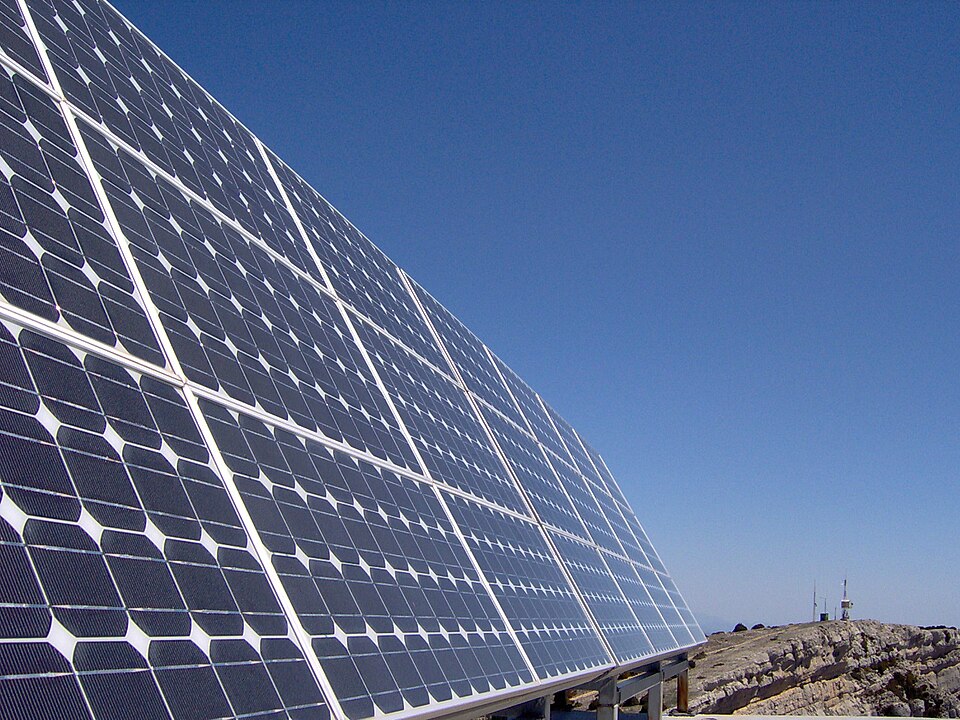
The figures highlight continued progress in the EU's shift towards cleaner energy, but also underline the scale of the challenge facing member states if the bloc is to meet its more ambitious climate and energy goals by 2030. Photo by Fernando Tomás from Zaragoza, Spain, Wikimedia commons.