









Czechia’s government has approved a draft state budget for 2027 that combines higher spending on public-sector wages, pensions, education and investment with a
projected CZK 386 billion deficit, setting up a major parliamentary debate over the country’s finances.
The cabinet approved the proposal unanimously on Monday, Prime Minister Andrej Babiš said. If Parliament adopts the plan, the deficit would become the second-largest in the country’s history.
The projected shortfall is CZK 3 billion below the Finance Ministry’s August estimate but CZK 76 billion higher than the deficit approved for 2026.
Revenue to rise, but spending is growing faster
Under the draft, the state expects to collect approximately CZK 2.199 trillion in 2027 while spending would reach around CZK 2.585 trillion.
That would represent a 3.9 percent increase in revenue compared with this year, while expenditure would climb by 6.5 percent.
Finance Minister Alena Schillerová said the revenue forecast had improved by CZK 9 billion since the August draft, partly because of higher expected proceeds from the sale of emissions allowances. At the same time, planned expenditure has increased by another CZK 6 billion, with additional funding directed particularly toward education and pensions.
Public-sector salaries set for increases
One of the most visible elements of the budget is a substantial increase in funding for public-sector wages.
The government plans to add CZK 33.9 billion to the public-sector pay budget. Depending on the profession and final agreements with trade unions, salary increases are expected to range between 5 and 9 percent.
The government has not yet finalized how the additional money will be distributed among individual groups of public employees. Those details are expected to be negotiated with unions.
The budget also maintains state funding for the renewable-energy fee, meaning consumers would continue to have that charge covered by the government rather than paying it directly through their electricity bills.
Higher pension and education spending
Pensions and education are also receiving additional resources compared with the government's earlier budget proposal.
The pension increase comes as the government prepares for a further rise in retirement payments in January, alongside a planned CZK 2,000 bonus.
Education spending has likewise been increased in the latest version of the budget, although the government has presented the overall package as part of a broader effort to strengthen public services and investment.
Defence spending reaches 2% of GDP
Defence is another major component of the 2027 spending plan.
According to Schillerová, defence expenditure is expected to reach CZK 191 billion, equivalent to 2 percent of gross domestic product. That would bring Czechia to the NATO spending benchmark for the first time under the proposed budget.
Investment spending is also projected to rise substantially, reaching approximately CZK 290 billion, compared with around CZK 260 billion in the 2026 budget.
The government has emphasized investment and healthcare as key priorities behind the proposed increase in expenditure.
Economists question the scale of borrowing
The size of the deficit is already generating criticism from economists.
Jan Berka, chief economist at investment platform Portu, told the Czech News Agency that the proposed deficit was too large given the current economic environment.
Berka noted that the deficit cannot be explained solely by higher investment. With the projected shortfall roughly CZK 100 billion larger than planned investment expenditure, he argued that the government would also be borrowing to finance part of its ordinary operations.
The cost of servicing the country's debt is itself expected to increase. The government forecasts that debt-service expenditure will rise from approximately CZK 110 billion in 2026 to CZK 130 billion in 2027.
Parliament still has the final say
The budget is not yet final. The government must submit the full proposal to the Chamber of Deputies by the end of September.
Lawmakers will then consider the key figures for state revenue, expenditure and the overall deficit. The Senate does not vote on the state budget, leaving the lower house as the decisive parliamentary institution for its approval.
Detailed budget documents are expected to provide a clearer picture of how the additional spending will be allocated across ministries and public services.
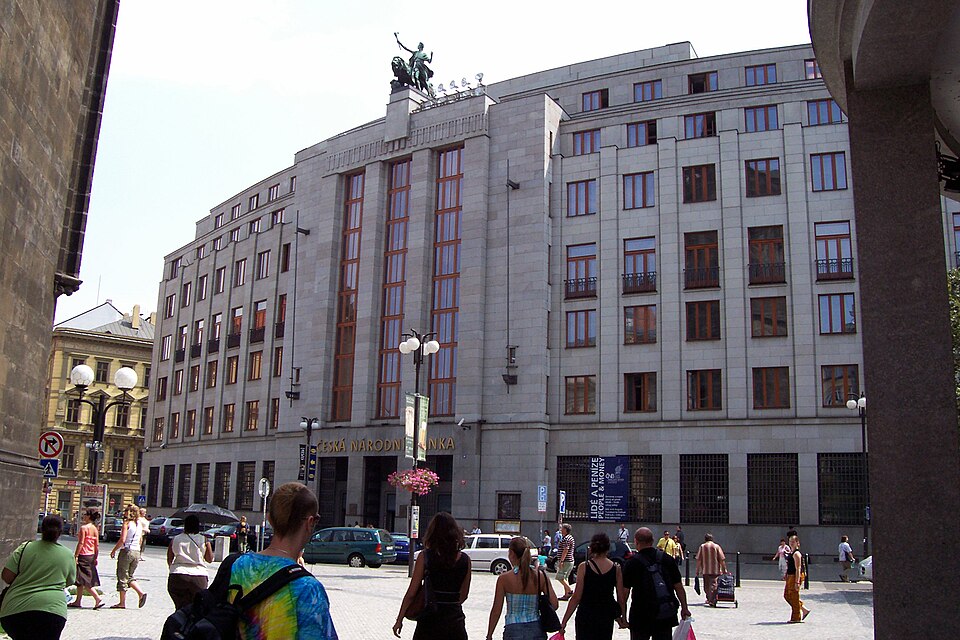
For households and public employees, the most immediate consequences are likely to come through higher public-sector wages, increased pension expenditure and continued government support for energy-related costs. For the state’s finances, however, the central issue will be whether the additional spending can be sustained while the government continues to run a deficit of hundreds of billions of crowns. Photo by Kirk979 , Wikimedia commons.