












The European Union is preparing almost €710 million in additional support for displaced people, host communities and populations affected by humanitarian emergencies,
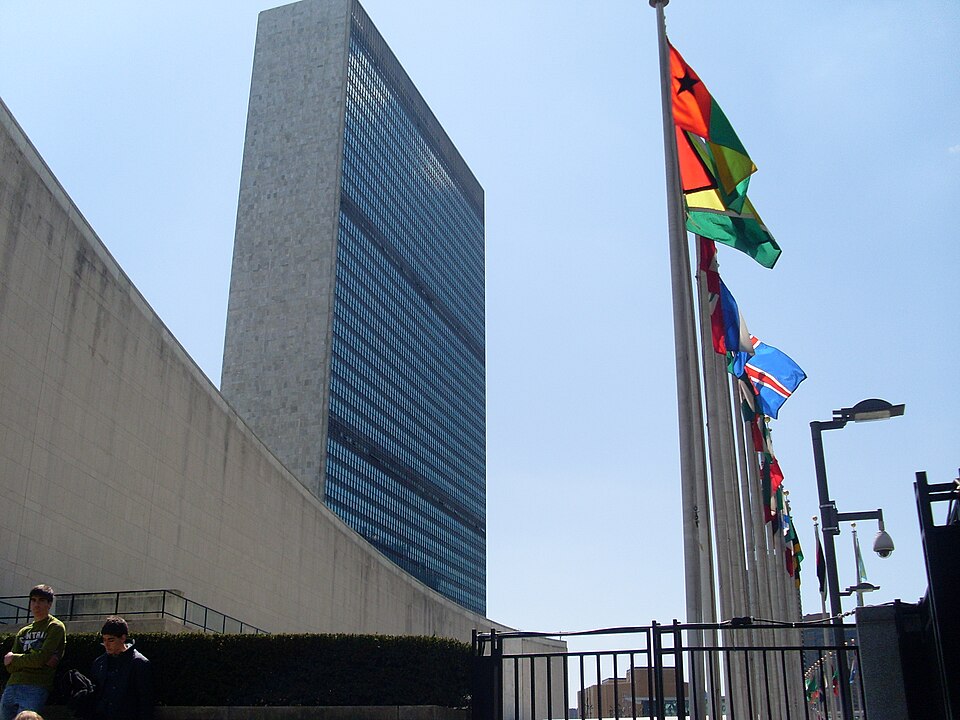
European Commission President Ursula von der Leyen announced in New York as the 81st UN General Assembly High-Level Week concluded.
The funding package targets a range of crises, with a particular focus on Sub-Saharan Africa, while also expanding humanitarian assistance for people affected by conflicts and emergencies in the Middle East and Ukraine. The announcement was made as part of Global Citizen's 2026 international campaign.
“Conflicts, extreme weather and rising living costs are disrupting the lives of many around the globe,” von der Leyen said. She added that the EU would support both displaced people and the communities hosting them, while increasing emergency assistance for those affected by wars in the Middle East and Ukraine.
€380 million for migration and displacement in Africa
A major component of the package is €380 million in additional migration-related funding for Sub-Saharan Africa in 2026.
The money will support vulnerable migrants and displaced populations, voluntary return and reintegration programmes, improved migration governance and longer-term responses to forced displacement.
Of this amount, €240 million will be directed to the EU's Migrant Protection, Return and Reintegration programme for Sub-Saharan Africa. Another €140 million will finance a broader range of measures, including migration management, protection programmes and durable solutions for displaced people and host communities.
Projects will include assistance in Eastern Mauritania, support for refugees and host communities in Kenya, and measures addressing the region's prolonged refugee crises. The EU also plans to invest in skills development designed to improve access to employment for affected communities.
New funding for peacebuilding and health emergencies
The Commission is also allocating €10 million for crisis-response activities in the Great Lakes region of Africa. The funding will support peace and stability initiatives and strengthen links between local mediation efforts and national and international peace processes.
Particular attention will be given to initiatives involving women, young people and civil society organisations, alongside programmes aimed at strengthening social cohesion and peacebuilding.
A further €7.5 million will go to the Democratic Republic of Congo to support the response to the Ebola outbreak. The funding is intended not only to address the immediate crisis but also to strengthen long-term disease surveillance, preparedness and response capacity, including through cooperation with the Institution Buisson Bernard and France's National Research Institute for Sustainable Development.
EU expands global health investment
The Commission also unveiled three new Global Gateway investments aimed at strengthening health systems in partner countries.
The measures include an EU guarantee intended to attract private investment into health and nutrition businesses in Sub-Saharan Africa, an EU-backed European Investment Bank loan to expand vaccine and biological-medicines production in Colombia, and €60 million in EU funding for primary healthcare in Ethiopia.
The initiatives form part of the EU's broader Global Health Resilience Initiative, which seeks to strengthen healthcare capacity and improve countries' ability to respond to future health emergencies.
€252 million earmarked for emergency humanitarian aid
The latest package also includes €252 million from the EU Emergency Aid Reserve, subject to approval by the EU budgetary authority.
The funds are intended to address urgent humanitarian needs caused by armed conflicts, mass displacement, epidemics and natural disasters.
Of the proposed allocation, €97 million would be directed to humanitarian operations in Sub-Saharan Africa, where conflict, food insecurity, malnutrition and climate-related shocks have intensified needs. Part of this funding would also reinforce the response to Ebola in the Democratic Republic of Congo and neighbouring countries.
Another €103 million is earmarked for vulnerable populations in Palestine and Lebanon, where continuing hostilities, displacement and pressure on essential public services have created severe humanitarian needs.
In Ukraine, the EU plans to provide €52 million for emergency humanitarian assistance and preparedness ahead of winter. The funding will cover areas including winterisation, shelter, essential services and emergency energy support.
EU humanitarian funding passes €2.5 billion
The Commission said that, subject to the necessary budgetary approval for the newly announced measures, it has allocated more than €2.53 billion in humanitarian assistance since the beginning of 2026.
The funding forms part of the EU's broader international partnerships and Global Gateway strategy, which seeks to strengthen cooperation in areas including healthcare, education, research, digital infrastructure, energy and transport.
The latest commitments underline the EU's effort to combine immediate humanitarian relief with longer-term investment in health systems, migration management, peacebuilding and economic opportunities for communities affected by displacement and crisis. Photo by Dendodge, Wikimedia commons.