













The European Commission has rolled out two major policy initiatives aimed at reinforcing Europe’s maritime backbone: a new EU Industrial Maritime Strategy and a dedicated
Ports Strategy. Together, they are designed to boost competitiveness, accelerate decarbonisation, and strengthen security and resilience across the EU’s vast waterborne sector.
With the world’s largest collective maritime area, Europe already plays a central role in global shipping and shipbuilding. EU-based companies lead in high-end vessel construction, advanced maritime technologies and services, while European fleets account for more than a third of global shipping tonnage. The Commission’s new strategies seek to turn that strength into long-term industrial and geopolitical advantage.
Industrial Maritime Strategy: jobs, innovation and global leadership
At the heart of the Industrial Maritime Strategy is a push to modernise Europe’s shipbuilding and shipping industries while safeguarding fair competition. A new EU Industrial Maritime Value Chains Alliance will bring together industry and public actors to advance high-tech shipbuilding, offshore wind support vessels, underwater drones and next-generation port equipment.
Research and innovation will be a major driver. Under the “Shipyards of the Future” flagship initiative, supported by Horizon Europe, innovative solutions will be tested directly in operational shipyards, with the aim of scaling successful technologies across the continent.
To support a competitive shipping sector, the Commission plans closer cooperation with Member States to promote EU flags and cut administrative burdens. This includes streamlining monitoring, reporting and verification rules linked to EU climate legislation for maritime transport.
Public demand and funding will also be leveraged to crowd in private investment, particularly for digitalisation and the renewal and decarbonisation of Europe’s shipping fleet. Upcoming revisions to public procurement rules may introduce targeted non-price criteria to favour innovative and low-emission solutions.
On the global stage, the Strategy addresses competitive imbalances through stronger export financing and targeted trade tools, including the possible creation of a sector-specific instrument. Reflecting the dual-use nature of maritime industries, it also integrates a defence dimension, with measures to expand naval industrial capacity and support dual-use ferry construction.
Skills and people are another priority. The Strategy includes initiatives to improve training, reskill shipyard workers and seafarers, and ensure quality employment as the sector adopts greener and more digital operations.
Ports Strategy: cleaner, smarter and more secure gateways
Europe’s ports are critical economic arteries, handling around 74% of the EU’s external trade, more than 3.4 billion tonnes of goods and nearly 395 million passengers each year. The new Ports Strategy recognises that ports are no longer just transport nodes but key hubs for energy, innovation, security and the wider blue economy.
To keep EU ports competitive, the Commission will promote innovation, digitalisation and better integration with rail and inland transport networks. New guidance will address foreign ownership of EU ports and EU-backed investments in ports outside the bloc.
Decarbonisation is a central pillar. The Strategy sets out measures to accelerate electrification, improve grid connections and support ports in becoming clean-energy hubs. A specific roadmap will help small and medium-sized ports remain competitive during this transition.
Security concerns also loom large. As critical entry and exit points, ports are increasingly targeted by organised crime and exposed to cyber and hybrid threats. Building on the EU Ports Alliance, the Commission plans to strengthen maritime security legislation, step up the fight against drug trafficking and improve supply-chain resilience.
Proposals include common frameworks for background checks of port workers, assessments of third-country ports, and a new forum for sharing best practices between cybersecurity and port authorities. An EU-wide security risk assessment will identify key vulnerabilities and mitigation measures.
Governance and next steps
To oversee implementation, the Commission will establish a high-level Maritime Industries and Ports Board, chaired by the responsible Commissioner and Executive Vice-Presidents.
The twin strategies were announced in the mission letter of Apostolos Tzitzikostas and align with broader EU competitiveness and ocean policy initiatives. They are the result of extensive consultations, including high-level dialogues with industry leaders and European port CEOs throughout 2025.
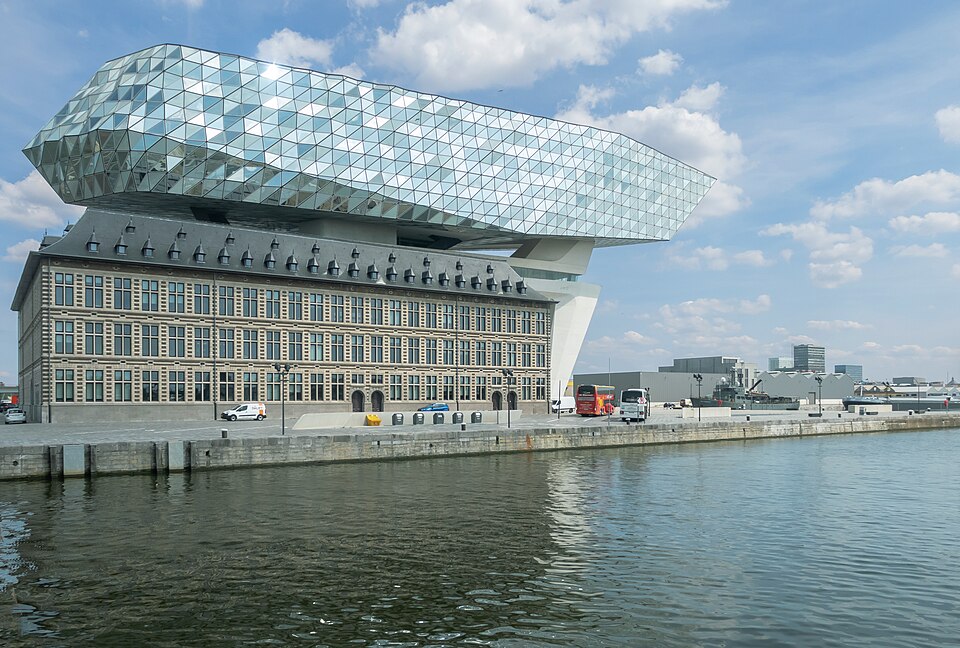
With these measures, Brussels is signalling that maritime industries and ports are not only economic assets, but strategic pillars of Europe’s green, secure and competitive future. Photo by Michielverbeek, Wikimedia commons.