
















Households across the euro area and the wider European Union closed 2025 with a slight but steady improvement in their financial situation, as income and consumption both
edged upward in the final quarter of the year.
According to newly released data from Eurostat, household real consumption per capita in the euro area rose by 0.5% in the fourth quarter, building on a 0.4% increase in the previous three months. Meanwhile, real income per capita posted a modest gain of 0.1%, recovering from a flat performance in the third quarter.
Across the EU as a whole, the trend was slightly stronger. Household consumption per person increased by 0.6%—matching the pace seen in the previous quarter—while real income per capita grew by 0.2%, an improvement on the 0.1% rise recorded earlier.
What’s driving income growth
The sources of income growth varied between regions. In the euro area, gains were largely supported by higher net property income and other current transfers. Across the EU, however, rising employee compensation played the biggest role in lifting household incomes.
Despite these positive contributions, rising current taxes and social contributions weighed on overall income growth in both regions, acting as the main downward pressure.
Savings rates decline
Even as incomes improved slightly, households saved less. The saving rate fell by 0.4 percentage points in the euro area and by 0.5 points across the EU compared with the previous quarter.
National data revealed a mixed picture. Savings increased in six EU countries, remained unchanged in one, and declined in eight. Greece recorded the strongest rise, with savings up by 2.1 percentage points, followed by Austria (+1.6 pp) and Czechia (+0.6 pp).
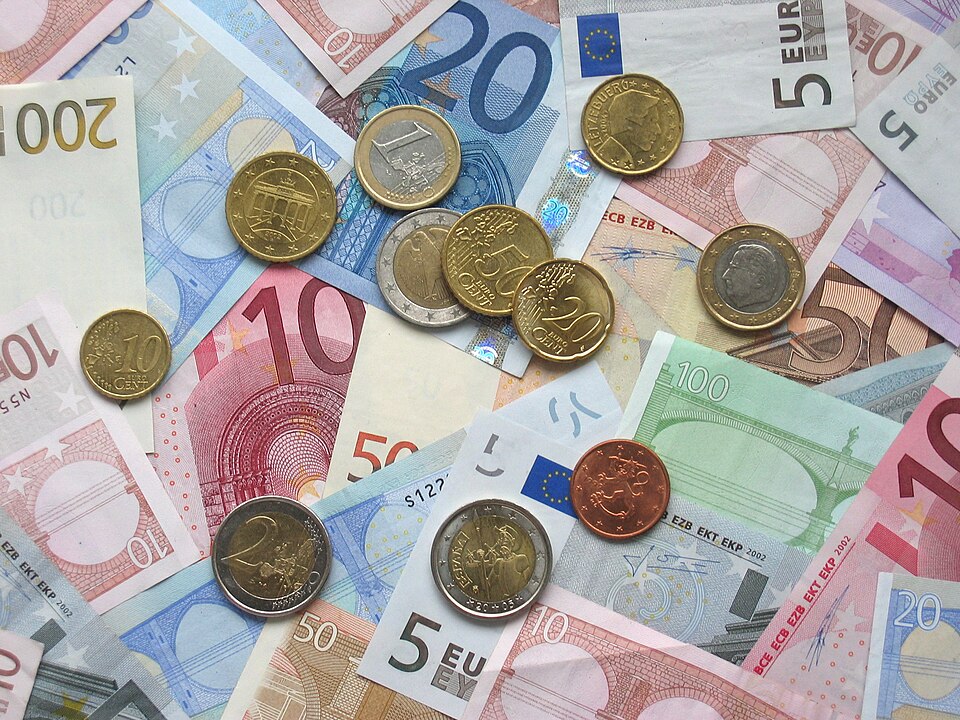
At the other end of the spectrum, Hungary saw the steepest drop in its saving rate (-1.4 pp), with Italy (-0.8 pp) and Finland (-0.5 pp) also posting notable declines. Photo by Avij, Wikimedia commons.