












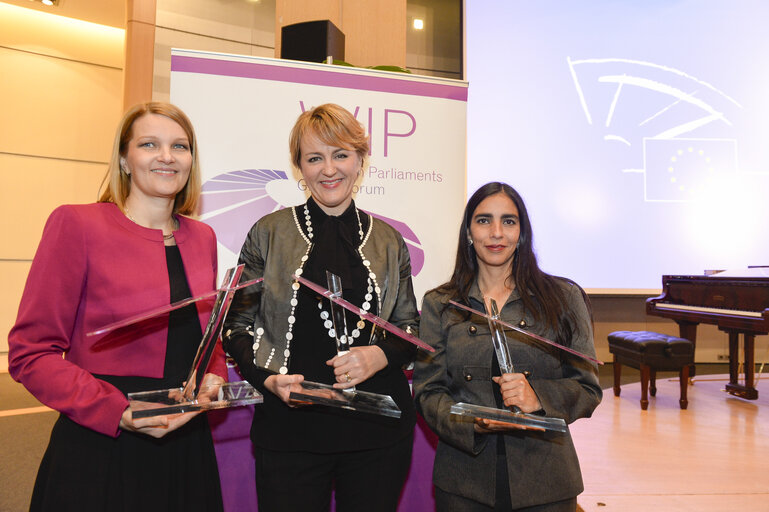
Women’s representation in political power across the European Union continues to rise, with fresh figures showing steady — though uneven — progress over the past decade.
In 2025, women occupied 33.6% of seats in national parliaments across the EU, a gain of 5.4 percentage points compared with 2015. While the overall trend is positive, significant differences remain between countries.
Northern Europe continues to lead the way. Finland topped the ranking with women holding 46.0% of parliamentary seats, followed closely by Sweden at 44.8% and Denmark at 44.7%.
At the other end of the spectrum, women remain significantly underrepresented in several EU states. Cyprus recorded the lowest share at 14.3%, while Hungary and Romania followed with 15.6% and 22.0%, respectively.
Progress across Europe — with one notable exception
Compared with a decade ago, nearly every EU country increased the share of women in parliament. The sole exception was Germany, where female representation fell by 3.5 percentage points.
Several countries posted particularly strong gains. Latvia led the surge with a remarkable 19.0-point increase, followed by Malta (+14.8 pp), France (+10.9 pp) and Czechia (+10.6 pp).
Women gaining ground in national governments
The upward trend extends beyond parliaments. In 2025, women held 31.9% of national government positions across the EU, up 4.2 percentage points from 2015.
Once again, Finland stood out, with women making up 60.0% of government members. Sweden achieved full gender parity at 50.0%, while France came close, with women accounting for 48.6% of ministers.
However, stark contrasts persist. Hungary reported 'no women' in its national government in 2025. Representation also remained very low in Romania (10.5%) and Czechia (11.8%).
Mixed trends since 2015
Most EU countries have expanded women’s presence in government over the past decade. Finland again led the way, recording the largest increase at +26.7 percentage points, followed by Lithuania (+20.4 pp) and Estonia (+17.5 pp).
Still, progress has not been universal. Declines were observed in six EU countries, with the steepest drops in Romania (-24.5 pp) and Slovenia (-7.7 pp). Smaller decreases were also reported in Netherlands, Belgium and Poland.
The bigger picture
The latest figures, drawn from data provided by the European Institute for Gender Equality (EIGE), underline clear momentum toward more balanced political representation — but also highlight how far some countries still have to go. As debates around equality and democratic legitimacy continue, women’s presence in Europe’s political institutions remains a key measure of progress. Photo by European Union 2013 - EP, Wikimedia commons.