
















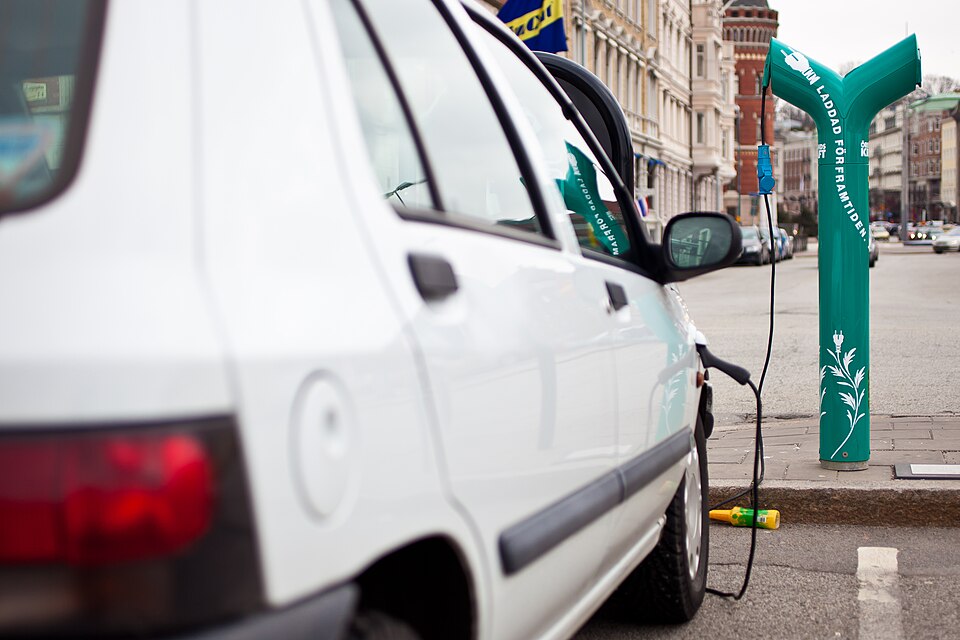
Northern Europe continues to set the pace in Europe’s transition to electric mobility. New regional transport data for 2024 show that the highest shares of electric passenger cars
are overwhelmingly concentrated in northern EU regions, underlining the impact of strong infrastructure, incentives, and consumer uptake.
Northern regions dominate electric car ownership
For the second year in a row, Flevoland emerged as the EU region with the highest share of electric passenger cars. In 2024, electric vehicles accounted for 22.1% of all passenger cars in the Dutch province, up 5.0 percentage points compared with 2023.
A group of northern capitals and economically strong regions followed, though at some distance. Stockholm recorded a 14.4% share, ahead of Hovedstaden at 13.3%. Belgium’s Vlaams-Brabant (12.9%) and Denmark’s Midtjylland (12.6%) completed the top five.
Only a small number of other EU regions crossed the 10% threshold in 2024. These included Denmark’s Sjælland, Syddanmark and Nordjylland, as well as Utrecht in the Netherlands.
The figures highlight a clear north–south divide in electric vehicle uptake across the EU, reflecting differences in charging infrastructure, income levels, urbanisation and national support schemes.
The data were released by Eurostat as part of its latest regional transport statistics, offering a snapshot of how vehicle fleets are evolving across Europe.
Valle d’Aosta tops the EU for utility vehicles
A different pattern emerges when looking at utility vehicles such as lorries, road tractors and special vehicles. Unlike electric passenger cars, these vehicles are more evenly spread across the EU, reflecting the geography of freight transport and industrial activity.
In 2024, Valle d’Aosta recorded the highest share of utility vehicles, at 22.0% of all registered vehicles. The region’s strategic location on the borders with Switzerland and France helps explain the result, as it serves as a key transit corridor for European freight traffic.
Valle d’Aosta was followed by West-Vlaanderen with 20.5%, while Northern and Western and Guyane both recorded shares of 20.0%.
The top 15 regions for utility vehicles also included several areas in Finland, Belgium and Spain, as well as Ireland and Cyprus, which is treated as a single region at this level of detail.
According to Eurostat, the concentration of utility vehicles depends on multiple factors, including motorway density, rail and port capacity, and the structure of regional economies. Regions with strong manufacturing bases or those located on major European freight routes tend to record higher shares of commercial and heavy vehicles.
Together, the findings show how Europe’s vehicle landscape is diverging: electric cars are surging in wealthy, well-connected northern regions, while freight vehicles remain closely tied to geography, infrastructure and trade flows. Photo by Håkan Dahlström from Malmö, Sweden, Wikimedia cmomons.