











The European Commission has officially kicked off work on a new Special Panel aimed at strengthening child safety online, as concerns grow over the
impact of social media and digital platforms on young people.
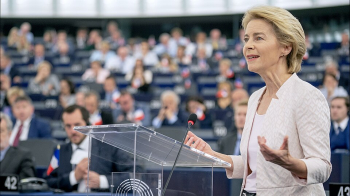
The panel held its first meeting today under the chairmanship of Commission President Ursula von der Leyen, following its announcement in her 2025 State of the Union address. Its mission: to deliver expert advice on how Europe can better protect and empower children online, including whether harmonised age restrictions for social media should be introduced across the EU.
“For decades, we have made the real world safer for children – and now we must do the same in the digital world,” von der Leyen said. She stressed that while technology brings enormous opportunities, these should not come at the expense of children’s safety, health or happiness. “Europe’s tech platforms already have responsibilities, and we will continue to enforce them. But we must go further.”
A broad mix of expertise – and youth voices
The Special Panel is co-chaired by Maria Melchior, Director at France’s National Institute of Health and Medical Research (INSERM), and Professor Dr Jörg M. Fegert, Head of Child and Adolescent Psychiatry and Psychotherapy at Ulm University Medical Centre. Alongside health experts, computer scientists and child-rights specialists, the panel will also include youth representatives to ensure young people’s experiences are reflected in the debate.
During the first meeting, participants reviewed current evidence on both the risks and benefits of children’s online activity. Discussions covered social media, gaming, messaging apps and the growing role of Artificial Intelligence. Particular attention was paid to the responsibilities of tech companies, including age-appropriate safety by design, addictive features and algorithms, and the need to boost digital literacy among children, parents and teachers.
Members also exchanged views on measures already in place within the EU and in other parts of the world.
Balancing protection and opportunity
Future meetings will shift focus to how minors benefit from online spaces, and how existing or new rules can reduce harm without undermining those benefits. Input from young people, parents and educators – including feedback from the President’s Youth Advisory Board and the Safer Internet Forum – will play a central role, especially in discussions on possible limits to social media use.
The panel is expected to meet several times from March 2026 onwards, with the goal of delivering concrete recommendations to the Commission President by the summer.
What happens next
A second meeting is planned in the coming months to explore potential policy options in more detail. The final report, due by summer 2026, is expected to shape the EU’s next steps on child online safety.
Background: building on existing EU rules
The panel’s work builds on what the Commission describes as the world’s most comprehensive framework for protecting minors online. This includes the Digital Services Act and its guidelines on child protection, the Better Internet for Kids (BIK+) Strategy, the Cyberbullying Action Plan, and ongoing efforts to tackle child sexual abuse online.
The Commission has also developed an EU age-verification app, designed to be privacy-preserving and interoperable with future EU Digital Identity Wallets. The app is currently being tested in Denmark, Greece, Spain, France and Italy.
Insights from Citizens’ Panels and the President’s Youth Advisory Board, submitted earlier this year, will also feed into the panel’s work as Europe looks for a “strong, realistic” approach to keeping children safe in the digital age. Photo by Catherine Scott, Wikimedia commons.