














More than half of Europeans avoided public transport in 2024, highlighting significant differences in how people across the EU choose to travel.
According to the latest data, 50.6% of EU residents aged 16 and over did not use public transport at all during the year. Meanwhile, a smaller share of the population relied on buses, trams, trains or metro systems on a regular basis.
Only 10.7% of Europeans used public transport every day, while 11.6% used it at least once a week. Another 10.0% reported using it monthly, and 17.1% said they used it less than once a month.
Southern Europe records lowest usage
Public transport usage varied widely across the European Union. Cyprus recorded the highest share of non-users, with 85% of the population saying they did not use public transport in 2024.
Several other countries also reported high levels of non-usage. These included Italy (68.0%), Portugal (67.8%), France (65.1%), Slovenia (61.6%), and Greece (61.3%). The figures suggest that many residents in these countries still rely heavily on private cars for daily travel.
Northern Europe leads in public transport use
At the opposite end of the scale, public transport plays a much bigger role in daily mobility in parts of northern Europe.
Luxembourg had the lowest share of people who did not use public transport, at just 15.7%. It was followed by Estonia (26.6%) and Sweden (26.7%), where a majority of residents reported using buses, trains, or other shared transit options at least occasionally.
Luxembourg also topped the ranking for weekly public transport use, with 23.1% of residents travelling this way every week. Latvia (19.2%) and Estonia (18.2%) followed closely behind.
A mixed picture for Europe’s transport habits
The data reveals a divided picture across Europe. While some countries have strong public transport cultures supported by accessible networks, others still show heavy dependence on private vehicles.
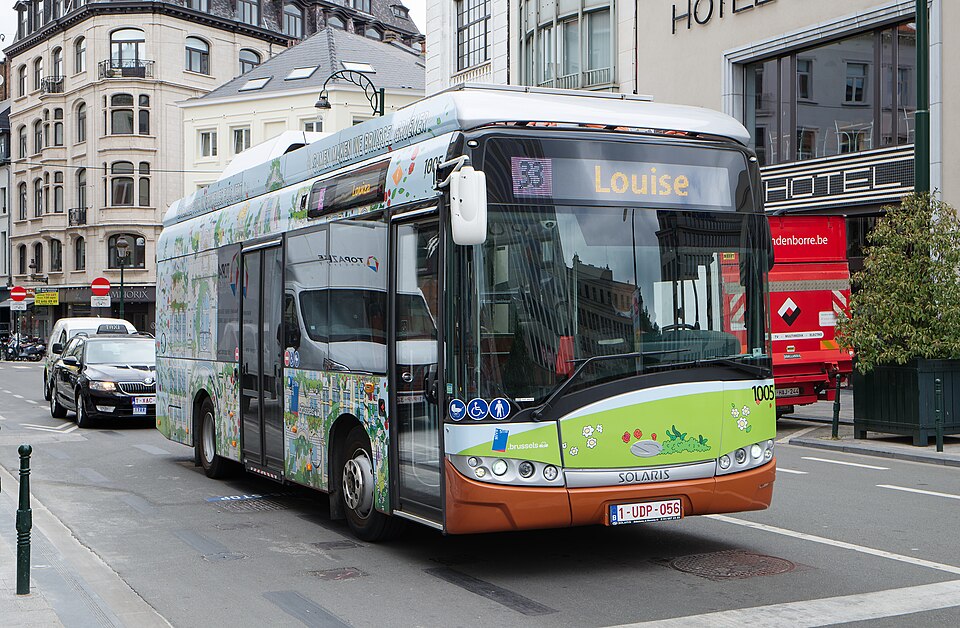
As cities across the EU push for greener mobility and reduced emissions, increasing public transport usage remains a key challenge for policymakers. Photo by Trougnouf (Benoit Brummer), Wikimedia commons.