















Business investment across the European Union fell to its lowest level in more than ten years at the close of 2025, underlining a sustained slowdown in corporate spending.
In the fourth quarter, the EU’s business investment rate dropped to 21.8%, the weakest reading since the third quarter of 2015. The figure marks the continuation of a downward trend that has been evident in recent years, raising concerns about the bloc’s economic momentum and future growth prospects.
A longer-term view shows a shifting investment landscape. Between 2014 and 2018, companies steadily increased spending, pushing the investment rate up from around 22% to nearly 24%. That period of expansion, however, gave way to a more fragile phase. Since 2021, investment has declined almost continuously, erasing earlier gains and bringing the rate back to levels not seen in a decade.
Short-term spikes over the past decade — notably in mid-2015, 2017, and 2019, as well as late 2019 and early 2020 — were largely driven by temporary surges in intellectual property imports in certain countries. These movements reflected broader globalisation trends rather than sustained domestic investment strength.
At the national level, disparities remain pronounced. Based on the latest available annual data for 2024, Hungary recorded the highest business investment rate in the EU at 28.4%, followed closely by Croatia (28.3%) and Czechia (27.6%). Belgium and Sweden also posted relatively strong figures, at 27.0% and 26.9% respectively.
In contrast, Luxembourg reported the lowest rate at 15.9%, with Ireland and Cyprus both at 16.0%. The Netherlands and Malta also ranked among the weaker performers, with investment rates below 17%.
The business investment rate is a key indicator of economic health, measuring how much companies invest relative to the value they generate. It is calculated using gross fixed capital formation — essentially spending on assets such as machinery, buildings, and intellectual property — in relation to gross value added.
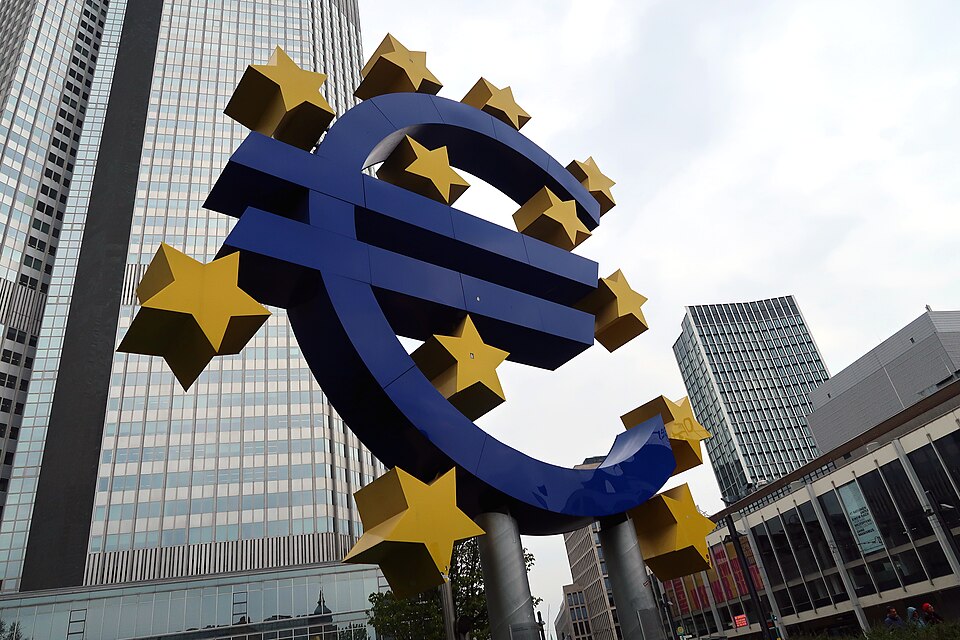
The latest figures suggest that, despite pockets of resilience, investment activity across the EU remains under pressure, potentially weighing on productivity, competitiveness, and long-term growth. Photo by Ra'ike (Wikipedia), Wikimedia commons.