













Road transport is steadily strengthening its role in Europe’s freight landscape, even as maritime shipping continues to dominate overall cargo movement across the EU.
According to newly released data from Eurostat, sea transport accounted for 67.0% of all freight activity within the EU in 2024, measured in tonne-kilometres. While still the clear leader, its share has slightly declined over the past decade.
Road transport, meanwhile, handled 25.7% of freight, making it the only mode to record a notable increase since 2014. Rail transport followed at 5.4%, while inland waterways represented 1.7%. Air freight remained marginal, contributing just 0.2% of total transport.
Road transport on the rise
Over the last ten years, road freight has been the standout performer. Its share grew by 3.3 percentage points, reflecting increased reliance on flexible, door-to-door logistics solutions across the bloc. In contrast, maritime transport saw a modest decline of 2.5 percentage points, while rail and inland waterways also edged down slightly. Air freight remained unchanged.
Maritime still leads in coastal nations
Despite its slight decline, maritime transport continues to dominate in countries with access to the sea. It remains the primary freight mode in 15 of the 22 EU coastal nations, with nine countries relying on it for more than 70% of their freight transport.
However, several countries recorded significant drops in maritime share compared to 2014. The steepest declines were observed in Finland (-12.4 percentage points), Sweden (-11.2 pp), and Romania (-7.2 pp).
Widespread growth in road freight
Road transport emerged as the leading freight mode in 11 EU countries in 2024. Over the past decade, 21 countries reported growth in road transport’s share, highlighting a broad structural shift in logistics patterns.
The most significant increases were seen in Lithuania (+22.4 percentage points), Latvia (+22.0 pp), and Romania (+14.8 pp), indicating rapid expansion of road-based freight networks in parts of Eastern Europe.
A shifting transport balance
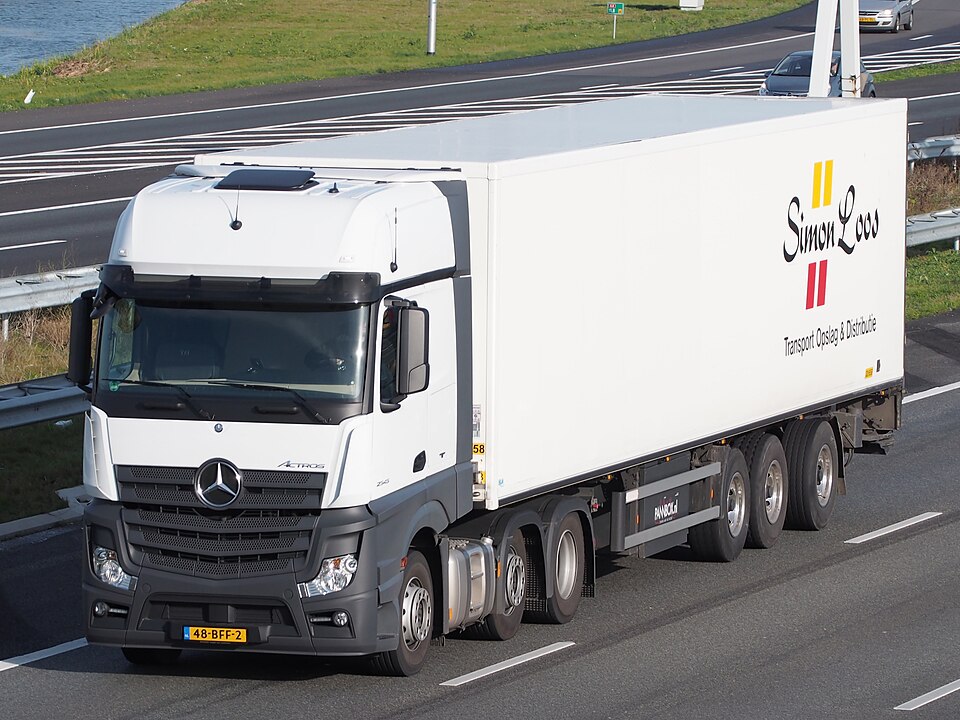
The latest figures point to a gradual rebalancing of freight transport across the EU. While maritime shipping remains essential—especially for international and bulk goods—road transport is becoming increasingly central to intra-European logistics, driven by speed, flexibility, and evolving supply chain demands. Photo by Alf van Beem, Wikimedia commons.