










Belgium’s Flemish Green party leader Aimen Horch has called for a new levy on major oil and gas companies, arguing that their wartime profits should be redirected to support the
country’s transition to renewable energy.
In his first major speech since taking the helm of Groen, Horch introduced the idea of a so-called “Trump tax” — a targeted contribution from large fossil fuel firms benefiting from geopolitical instability, particularly the ongoing conflict in the Middle East. The revenue, he said, should be invested directly in domestic green energy projects to stabilize household energy costs.
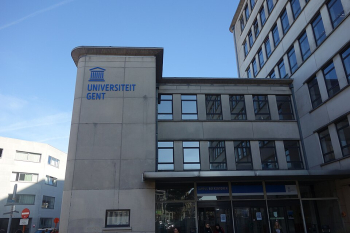
Speaking to party members in Ghent, Horch framed rising energy bills as one of the most pressing concerns for Belgian households. “People are losing sleep over their energy bills,” he said, warning that volatility could worsen in the coming months. “While many are suffering from this war, one group continues to profit: oil and gas companies.”
Horch positioned his proposal as a clear alternative to the policies of Belgium’s federal government, which he criticized for maintaining reliance on fossil fuels. “They are choosing gas and oil, leaving us dependent on global powers,” he argued. “We choose certainty — the certainty of renewable energy we control ourselves.”
The newly elected leader, who cites progressive international figures as inspiration, also took aim at prominent Belgian politicians advocating for increased gas extraction or renewed ties with traditional energy suppliers. Without naming names directly in his speech, he criticized what he described as “outdated thinking” that prioritizes short-term supply over long-term resilience.
“Energy security is national security,” Horch said. “The sun doesn’t pass through geopolitical chokepoints, and wind energy doesn’t depend on foreign regimes.”
His remarks underscore a broader push within Groen to reposition itself as a leading voice on both climate policy and economic stability. Founded as part of Europe’s wider Green political movement, Groen has long advocated for sustainability, social justice, and a rapid transition away from fossil fuels. In recent years, the party has focused increasingly on linking climate action with cost-of-living concerns — an issue that resonates strongly with voters facing rising energy prices.
Looking ahead, Horch announced that the party will host a major policy conference in November, aimed at tackling what he described as “the defining challenges of our time”: energy security, international stability, and the resilience of democratic systems.
With his “Trump tax” proposal, Horch signals a more assertive approach — one that seeks to hold global energy players accountable while accelerating Belgium’s shift toward a greener, more independent energy future. Photo by groen.be