










Luxembourg’s government has confirmed a significant rise in the national minimum wage, with Economy Minister Lex Delles defending the move as a balanced response to
economic pressures and social concerns.
Following a Government Council meeting on Friday, officials announced that the minimum wage will increase by 3.8% starting 1 January. The decision was presented by Labour Minister Marc Spautz and Economy Minister Lex Delles, who later elaborated on the policy in a media interview.
The January increase is expected to follow an earlier index-linked adjustment of around 2.5%, likely to take effect before the summer. Combined, the two measures would boost the minimum wage by approximately €170 — about €65 from indexation and €105 from the January rise.
Tackling “working poor” beyond wages
Despite the increase, questions remain over whether it will meaningfully address the issue of in-work poverty. Delles stressed that the challenge of “working poor” households cannot be solved by wages alone.
He pointed to a broader support framework that includes energy subsidies, family benefits, and tax exemptions for low-income earners. According to the minister, these measures are designed to preserve purchasing power in a difficult economic climate.
Support for businesses amid slow growth
To ease the burden on employers, the government plans to offset 1.3 percentage points of the wage increase. While details of the compensation mechanism are still under discussion, Delles said the move reflects concerns about the country’s slowing economy.
Luxembourg has recorded modest growth of around 1% annually over the past two years, well below its usual average of approximately 3%. At the same time, unemployment has climbed to 6.2%, adding further pressure on policymakers to strike a careful balance.
EU targets and economic uncertainty
The wage increase also brings Luxembourg closer to European benchmarks. Under EU guidelines, minimum wages should reach at least 60% of the median wage. Delles indicated that, with the combined increases, Luxembourg would slightly exceed that threshold at around 60.2%.
However, the broader economic outlook remains uncertain. The minister cited global instability, including the aftermath of the COVID-19 pandemic, the war in Ukraine, persistent inflation, and ongoing energy challenges.
Employers and unions at odds
Reactions to the announcement have been sharply divided.
Employer groups, including the Union of Luxembourg Enterprises (UEL), warned that higher labour costs could fuel inflation and potentially lead to job losses — even with government compensation in place.
Trade unions, meanwhile, have strongly criticised the decision. Nora Back, head of the OGBL union, accused the government of acting unilaterally without proper consultation. She also questioned the use of public funds to subsidise businesses and highlighted the lack of clarity surrounding the duration and cost of the compensation scheme.
Unions had pushed for a much larger increase — around 11% — and have signalled possible protests in response to what they see as a setback for social dialogue.
A political balancing act
Delles acknowledged the difficulty of reconciling opposing demands. Employers had argued against any wage increase, while unions called for a substantial rise. In the end, the government opted for what it sees as a compromise aimed at providing stability for both workers and businesses.
Despite mounting criticism and the threat of union action, the government has made clear it will stand by its decision, while leaving the door open for continued dialogue.
Key facts about Luxembourg’s minimum wage
- Luxembourg has 'one of the highest minimum wages in the world', reflecting its high cost of living.
- As of recent figures, the 'gross monthly minimum wage exceeds €2,500 for unskilled workers', and is higher for skilled employees.
- The system is 'automatically indexed to inflation', meaning wages rise when living costs increase.
- Luxembourg is among a small group of EU countries that 'consistently meet or exceed the 60% median wage benchmark'.
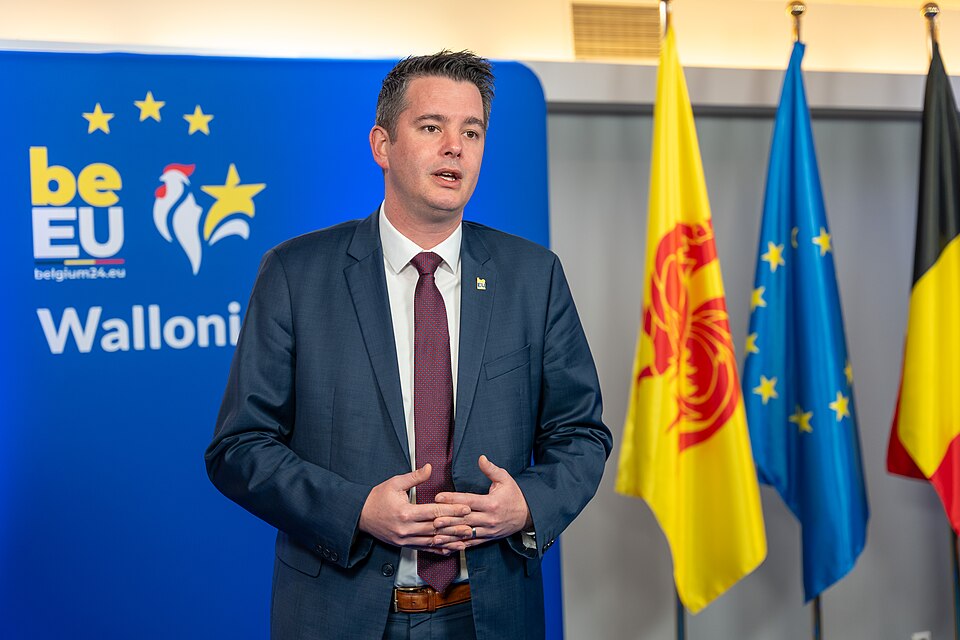
- Despite high wages, the country still faces challenges with 'income inequality and cross-border workers', many of whom commute daily from neighbouring countries. Photo by belgium24.eu, Wikimedia commons.