











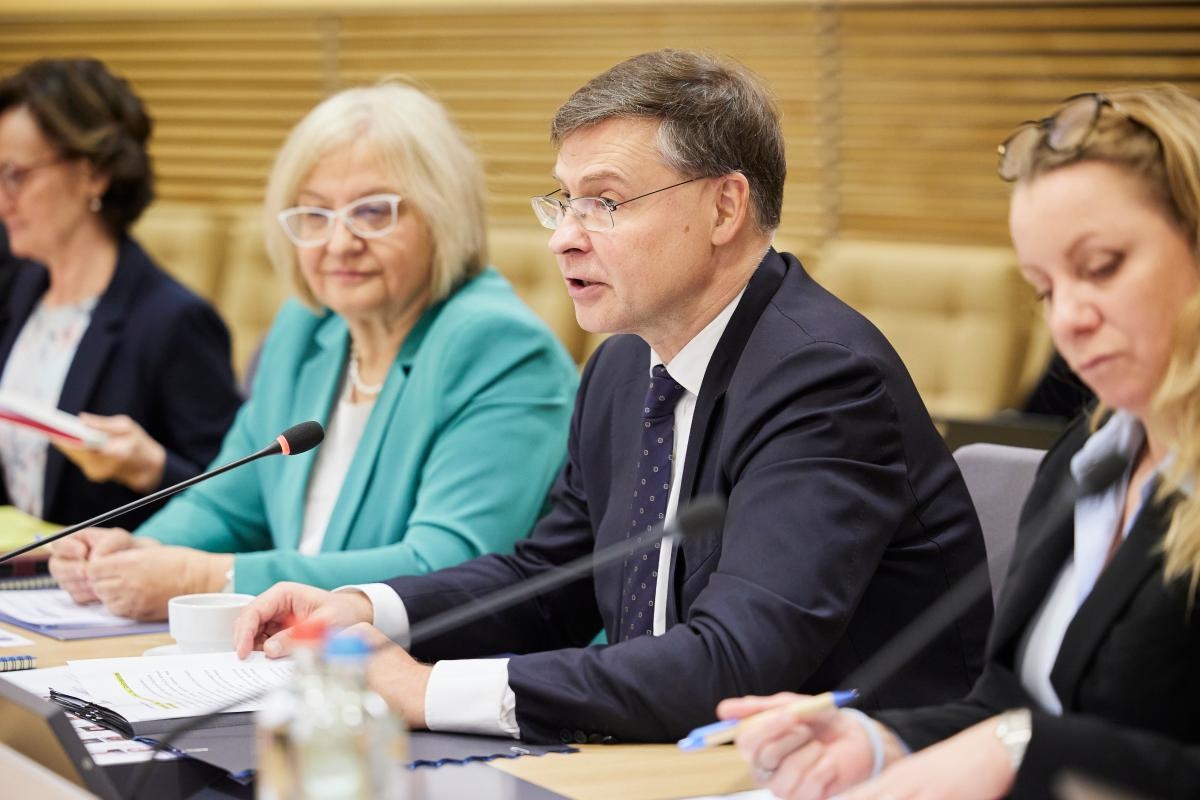
In a move aimed at easing bureaucracy for Europe’s agricultural sector, Valdis Dombrovskis chaired a high-level Implementation Dialogue on agricultural farm statistics in Brussels
on 24 March 2026. The meeting brought together farmers’ representatives, agribusiness leaders, social partners, and national statistical authorities for a frank exchange on how to modernize data collection while reducing administrative burden.
The discussion focused on striking a balance: maintaining high-quality, reliable agricultural statistics while making reporting simpler and less time-consuming for farmers and businesses.
Lessons from past data collection
Participants began by reviewing the implementation of Regulation (EU) 2018/1091, which underpins the EU’s agricultural census conducted in 2020, along with farm surveys carried out in 2023 and scheduled for 2026. These datasets have provided policymakers with detailed insights into farming realities across Europe, but they have also highlighted inefficiencies in how data is gathered and reused.
A key takeaway was the need to avoid duplication. Stakeholders emphasized the importance of the “collect once, use multiple times” principle—ensuring that data already collected by authorities or businesses can be reused across systems instead of repeatedly requested from farmers.
Push for smarter, connected data systems
A recurring theme throughout the dialogue was interoperability—making different data systems compatible so information can flow seamlessly between them. Experts pointed to the potential of linking administrative registers using unique farm identifiers, allowing authorities to connect existing datasets without placing additional reporting demands on farmers.
There was also strong support for expanding the use of new data sources, including digital tools and farm machinery data, as agriculture becomes increasingly technology-driven. However, participants stressed that any new framework must clearly define data requirements, apply harmonized standards, and communicate changes effectively to stakeholders.
Keeping statistics relevant for farmers
Beyond efficiency, attendees highlighted the need for agricultural statistics to evolve in step with the sector. Faster data delivery, better tracking of emerging trends, and more tailored insights for farmers were identified as priorities.
The goal, participants agreed, is not just to collect data for policymakers, but to ensure it provides tangible value to those working on the ground.
Dombrovskis: farmers must benefit from the system
Closing the session, Commissioner Dombrovskis underlined the importance of stakeholder input in shaping future EU policies. He noted that simplifying reporting requirements must go hand in hand with ensuring that official statistics remain relevant and useful in a rapidly changing agricultural landscape.
Eurostat will now incorporate the feedback from this dialogue into preparations for the EU’s future framework on farm statistics.
Who is Valdis Dombrovskis?
Valdis Dombrovskis is a Latvian politician and one of the European Union’s most influential economic policymakers. A former Prime Minister of Latvia, he played a key role in steering the country through the aftermath of the 2008 financial crisis.
At the European Commission, he has held several senior roles, including Executive Vice-President responsible for an economy that works for people. Known for his focus on fiscal stability, financial regulation, and economic coordination across EU member states, Dombrovskis has increasingly been involved in cross-sector initiatives—such as agricultural data policy—where economic efficiency and regulatory simplification intersect.