



Latest News

EU employment hits new high as labour market tightens in early 2026

EU employment hits new high as labour market tightens in early 2026 EU employment hits new high as labour market tightens in early 2026
  The European Union's labour market continued to strengthen in the first quarter of 2026, with employment reaching a new high while overall...
Read More...

Social media adoption climbs across EU firms, led by Nordic and Baltic frontrunners

Social media adoption climbs across EU firms, led by Nordic and Baltic frontrunners Social media adoption climbs across EU firms, led by Nordic and Baltic frontrunners
  According to new data published by Eurostat, social media has become a standard tool for business communication across the European...
Read More...

Sweden retreats from plan to jail 13-year-olds as it moves to toughen youth crime laws

Sweden retreats from plan to jail 13-year-olds as it moves to toughen youth crime laws Sweden retreats from plan to jail 13-year-olds as it moves to toughen youth crime laws
  Sweden has abandoned a proposal to allow the imprisonment of 13-year-old offenders after failing to secure sufficient parliamentary...
Read More...

EU and Brazil elevate digital cooperation with new strategic partnership signed in Brasília

EU and Brazil elevate digital cooperation with new strategic partnership signed in Brasília EU and Brazil elevate digital cooperation with new strategic partnership signed in Brasília
The European Union and Brazil are set to deepen their long-standing digital relationship today with the formal signing of a Digital Partnership...
Read More...

Germany and France abandon flagship joint fighter jet programme after years of deadlock

Germany and France abandon flagship joint fighter jet programme after years of deadlock Germany and France abandon flagship joint fighter jet programme after years of deadlock
Germany and France have decided to terminate their flagship joint effort to develop a next-generation fighter aircraft, marking the collapse...
Read More...

Five EU founding states push for tighter controls on voting rights in future enlargement

Five EU founding states push for tighter controls on voting rights in future enlargement Five EU founding states push for tighter controls on voting rights in future enlargement
  A group of five founding members of the European Union — Belgium, the Netherlands, Luxembourg, France and Germany — are calling for...
Read More...

Must Read

Most Popular Stories

VIDEO AND audio news:

Features, views, analysis

business

Latest News

EU employment hits new high as labour market tightens in early 2026

EU employment hits new high as labour market tightens in early 2026 EU employment hits new high as labour market tightens in early 2026
  The European Union's labour market continued to strengthen in the first quarter of 2026, with employment reaching a new high while overall...
Read More...

Social media adoption climbs across EU firms, led by Nordic and Baltic frontrunners

Social media adoption climbs across EU firms, led by Nordic and Baltic frontrunners Social media adoption climbs across EU firms, led by Nordic and Baltic frontrunners
  According to new data published by Eurostat, social media has become a standard tool for business communication across the European...
Read More...

Sweden retreats from plan to jail 13-year-olds as it moves to toughen youth crime laws

Sweden retreats from plan to jail 13-year-olds as it moves to toughen youth crime laws Sweden retreats from plan to jail 13-year-olds as it moves to toughen youth crime laws
  Sweden has abandoned a proposal to allow the imprisonment of 13-year-old offenders after failing to secure sufficient parliamentary...
Read More...

EU and Brazil elevate digital cooperation with new strategic partnership signed in Brasília

EU and Brazil elevate digital cooperation with new strategic partnership signed in Brasília EU and Brazil elevate digital cooperation with new strategic partnership signed in Brasília
The European Union and Brazil are set to deepen their long-standing digital relationship today with the formal signing of a Digital Partnership...
Read More...

Germany and France abandon flagship joint fighter jet programme after years of deadlock

Germany and France abandon flagship joint fighter jet programme after years of deadlock Germany and France abandon flagship joint fighter jet programme after years of deadlock
Germany and France have decided to terminate their flagship joint effort to develop a next-generation fighter aircraft, marking the collapse...
Read More...

Five EU founding states push for tighter controls on voting rights in future enlargement

Five EU founding states push for tighter controls on voting rights in future enlargement Five EU founding states push for tighter controls on voting rights in future enlargement
  A group of five founding members of the European Union — Belgium, the Netherlands, Luxembourg, France and Germany — are calling for...
Read More...

Must Read

Most Popular Stories


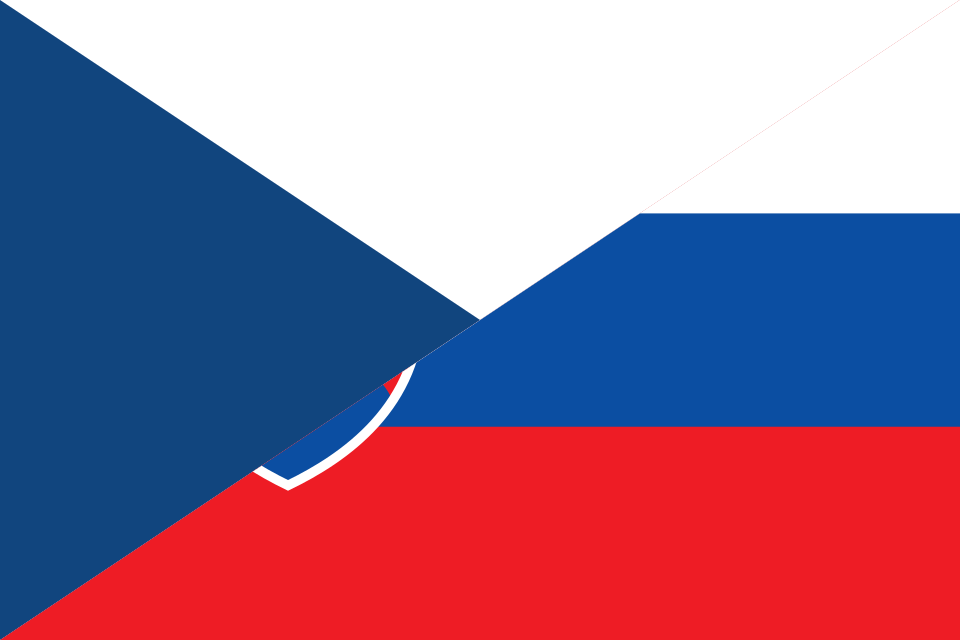
After a three-year hiatus, the governments of Czechia and Slovakia have resumed joint meetings, marking a symbolic yet significant moment in their post-split relationship.

While day-to-day cooperation between the two countries never truly faltered, the renewed political dialogue sends a broader message—both domestically and across the European Union.

According to political scientist Petr Kaniok, practical cooperation between the neighboring states has remained consistently strong. Economic links, shared infrastructure, and institutional collaboration have continued largely uninterrupted, even during the pause in formal high-level meetings.

“There is still very close cooperation,” Kaniok notes, pointing in particular to the steady flow of Slovak students enrolling at Czech universities. This movement reflects not only geographic proximity but also deep cultural and linguistic ties that make cross-border education seamless.

The suspension of joint cabinet meetings, however, was not without meaning. Though largely symbolic, it hinted at political divergence between the two governments. Now, their resumption signals a shift—one that carries implications beyond bilateral relations.

Kaniok emphasizes that diplomacy operates on both practical and symbolic levels. Restarting these meetings suggests that the Czech government is willing to engage more openly with Slovakia’s current leadership, despite differences in political outlook. This is particularly relevant in the context of the European Union, where Slovakia has, in recent years, taken positions that some member states view as more ambivalent—especially regarding support for Ukraine and relations with Russia.

The renewed dialogue may therefore be interpreted as a sign of cautious political alignment, or at least pragmatic engagement. At the same time, it could influence how Czechia is perceived by its EU partners, who closely watch such regional dynamics.

Yet beyond politics, the human dimension of Czech–Slovak relations remains remarkably stable. The steady presence of Slovak students in Czech classrooms illustrates a deeper continuity—one rooted in shared history and mutual familiarity. For many young Slovaks, studying in Czechia is still a natural choice, requiring little adaptation thanks to the similarities in language and culture.

Ultimately, while political winds may shift, the foundation of Czech–Slovak relations appears resilient. The reopening of formal government talks does not so much rebuild ties as reaffirm a partnership that has endured—quietly but consistently—since the countries went their separate ways more than three decades ago.

Historical context: Czech–Slovak relationship

To understand the depth of today’s relationship, it helps to look back at the shared history of the two nations.

Czechia and Slovakia were once part of a single state, Czechoslovakia, founded in 1918 after the collapse of the Austro-Hungarian Empire. The country brought together Czechs and Slovaks under one political framework, though differences in economic development and political expectations persisted throughout its existence.

After decades marked by events such as World War II and communist rule, the end of the Cold War reopened debates about the future of the federation. These discussions culminated in the peaceful dissolution of the state on January 1, 1993—often referred to as the Velvet Divorce.

Unlike many geopolitical separations, the split was amicable, with both sides maintaining strong diplomatic, economic, and cultural ties. Since then, Czechia and Slovakia have often been described as having an “above-standard” relationship—one that goes beyond typical neighborly cooperation.

Today, both countries are members of the European Union and NATO, and despite occasional political differences, their shared past continues to shape a uniquely close partnership in Central Europe. Photo by SenseiAC, Wikimedia commons.

deneme