










Montenegro’s path toward European Union membership received a fresh boost this week as Maxime Prévot, Belgium’s foreign minister, underscored that the country’s future “lies
firmly within the EU” during an official visit to Montenegro.
Wrapping up the first leg of his Western Balkans tour, Prévot praised Montenegro’s steady reform momentum, noting that the country remains the most advanced EU candidate in the region. With an ambitious target of joining the bloc by 2028, Montenegro has positioned itself as a frontrunner among Balkan aspirants.
During his visit, Prévot toured the high-end Luštica Bay development—an investment project led by Belgian firm Besix—highlighting growing economic ties between Belgium and Montenegro. Later, in the capital Podgorica, he met with Montenegro’s Foreign Minister Ervin Ibrahimović at Villa Gorica.
“I am here to deliver a message of strong support,” Prévot stated. “Montenegro is already part of the European family—its future in the EU is not a question of if, but when.”
Ibrahimović welcomed Belgium’s continued backing, describing it as a crucial source of encouragement for ongoing reforms.
Reform challenges remain
Despite clear progress, Montenegro still faces significant hurdles on its EU path. Prévot emphasized the importance of strengthening judicial independence, tackling corruption and organized crime, and resolving lingering bilateral disputes, including issues involving Croatia.
He also turned attention inward to the EU itself, warning that internal decision-making processes could slow enlargement. “If the EU cannot move beyond unanimity in key decisions, the enlargement process risks losing credibility,” he said, stressing the geopolitical importance of keeping Balkan countries aligned with Brussels rather than drifting toward competing influences.
Montenegro at a glance
Montenegro, a small Adriatic nation of around 620,000 people, declared independence in 2006 and has steadily pursued Euro-Atlantic integration. It joined NATO in 2017 and officially became an EU candidate country in 2010. Known for its dramatic coastline, mountainous terrain, and tourism-driven economy, Montenegro is increasingly seen as a strategic bridge between the EU and the Western Balkans.
Its progress is closely watched as a test case for future EU enlargement in the region.
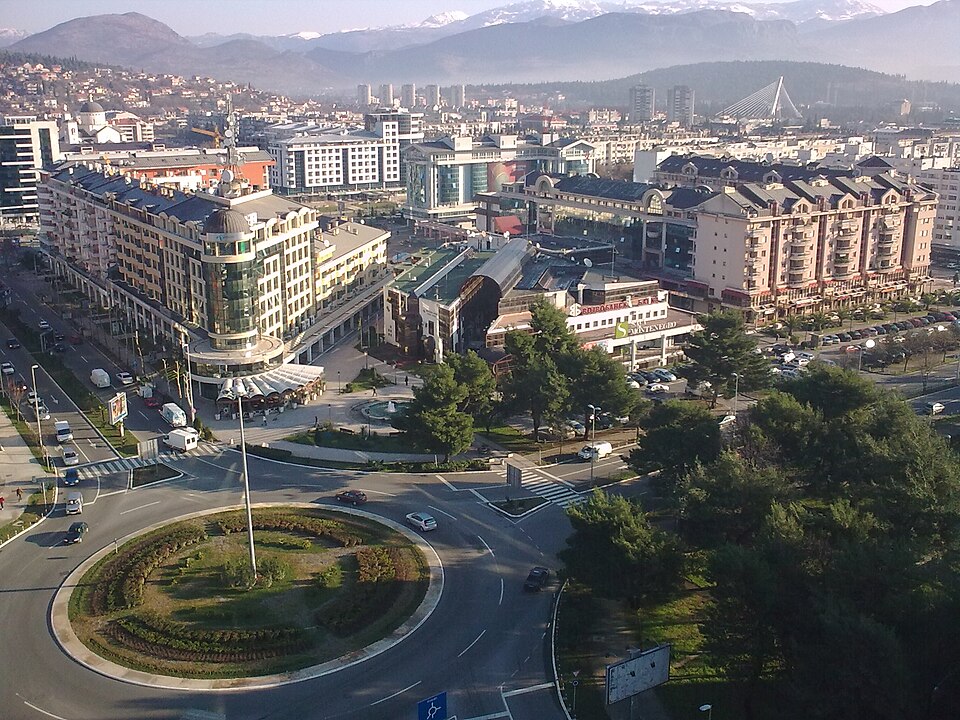
Prévot’s diplomatic mission continues in Serbia, another EU candidate state that remains significantly behind Montenegro in accession negotiations. Photo by Nije bitno..., Wiimedia commons.