















The European Commission has taken a major step to secure long-term financial backing for Ukraine, unveiling a comprehensive support package worth €90 billion for the years
2026 and 2027. The move underlines the European Union’s continued political, financial and military commitment to Ukraine as it defends itself against Russia’s ongoing war of aggression.
On Wednesday, the Commission adopted a series of legislative proposals designed to ensure uninterrupted EU assistance over the next two years. The package translates political commitments made by EU leaders in December into concrete legal and financial instruments.
At the core of the initiative is a new €90 billion loan to Ukraine, known as the Ukraine Support Loan, proposed under Article 212 of the Treaty on the Functioning of the European Union (TFEU). The funding will be split into two main pillars: around €60 billion will be earmarked for military assistance, while the remaining €30 billion will be provided as general budget support to help Ukraine maintain essential state functions and public services.
In parallel, the Commission has proposed amendments to the existing Ukraine Facility, allowing it to serve as one of the vehicles for delivering this budgetary assistance. A further proposal would adjust the EU’s Multiannual Financial Framework (MFF) to enable the loan to be backed by the EU budget’s so-called “headroom”, ensuring its financial security.
The package follows a December agreement by the European Council, in which EU leaders committed to decisive support for Ukraine’s budgetary and defence needs over 2026 and 2027. According to the Commission, the new measures are essential for strengthening Ukraine’s resilience, supporting its defence capabilities, and deepening its integration with Europe’s defence industrial base.
The EU has also reiterated that it retains the option to use Russian assets immobilised within the Union to repay the loan, in full compliance with EU and international law. In this context, the concept of a reparation loan, first proposed in December 2025, remains under consideration.
Because unanimity among all EU member states could not be achieved in a reasonable timeframe, the agreement was reached under enhanced cooperation, a legal mechanism that allows a group of member states to move forward together on specific initiatives.
Financing for the Ukraine Support Loan will come from common EU borrowing on international capital markets. As with previous assistance programmes — including Macro-Financial Assistance+, the Ukraine Facility, and the G7-led Extraordinary Revenue Acceleration (ERA) loans — the loan will be guaranteed by the EU budget.
Following the European Council’s political green light, the Commission swiftly proposed a Council Decision authorising enhanced cooperation. The legislative proposals adopted now put that decision into practice and pave the way for disbursements to begin.
Next steps
The proposals have been formally submitted to the European Parliament and the Council, launching the legislative process. The Commission has stressed that rapid adoption is crucial if financial support is to start flowing in the second quarter of 2026, as planned.
Once the legislation is approved, the Commission will adopt the necessary implementing decisions and work closely with Ukrainian authorities to finalise the operational arrangements for the first loan disbursement.
As with all EU financial assistance to Ukraine, the support will be tied to strict conditions. These include reforms to strengthen the rule of law and intensify the fight against corruption, as set out in Ukraine’s reform plan.
Background
Since the beginning of Russia’s full-scale invasion, the EU and its member states have provided a total of €193.3 billion in support to Ukraine and its people — the largest contribution by any international partner. This includes €3.7 billion generated from the proceeds of immobilised Russian assets.
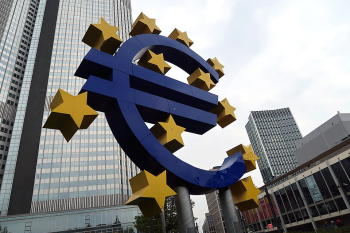
According to International Monetary Fund estimates, the new EU package will cover roughly two thirds of Ukraine’s total financing needs for 2026 and 2027. The Commission has подчеркed that sustained and coordinated support from international partners remains vital, particularly through timely implementation of G7 commitments under the ERA loans initiative. Photo by Francisco Anzola, Wikimedia commons.