














“Tomorrow, we mark the 81st anniversary of the liberation of the Nazi concentration and extermination camp Auschwitz-Birkenau. We remember and pay tribute to the six million
Jewish women, men and children murdered in the Holocaust, as well as all the other innocent victims of the Nazi regime. These lives were brutally ended by an ideology of hatred but their memory shall endure as moral testament to humanity and as a permanent warning.
Three generations after the Shoah, Holocaust remembrance is increasingly important. Holocaust distortion is being used to divide us, to relativise crime and to fuel antisemitism. Let us be clear: nothing can ever justify distorting, minimising or instrumentalising one of the darkest chapters in Europe's history.
We have witnessed a spike of antisemitic acts all over Europe, forcing many Jews to hide their identity and live in fear. This is unacceptable. There is no place and no justification for antisemitism.
We stand with our European Jewish communities. Jewish life in Europe must be able to thrive, not hide. Europe must be a safe place for Jews and people of all faiths. We continue to implement the EU Strategy on combating antisemitism and fostering Jewish life together with all EU Member States. To tackle antisemitism online, we are developing a network of trusted flaggers. We are working to prevent radicalisation, ensuring the protection of vulnerable groups online and strengthening security measures to protect public spaces and places of worship from attacks.
We are now reaching the end of the so-called 'era of the witness'. As the last survivors pass away, our responsibility increases. We must find new ways to remember the atrocities, to tell the truth of what happened and to learn from the past. To this end, we are safeguarding the Holocaust sites and strengthening their visibility and recognition across generations.
Remembrance is not a given. It depends on us. We must pass on the lessons of the Shoah and build a Europe free from antisemitism and all forms of hatred. Holocaust remembrance must remain accurate, relevant and meaningful. This is our shared responsibility and our enduring commitment as Europeans.”
Background
In October 2024, the European Commission published its progress report on the first-ever EU Strategy on Combating Antisemitism and Fostering Jewish Life, adopted in October 2021, to support EU Member States and civil society in the fight against antisemitism and in fostering Jewish life in the EU. Holocaust remembrance is an essential pillar of ensuring that we never forget our history. In February 2024, the Commission launched an initiative to foster remembrance of the Holocaust by developing the Network of Places Where the Holocaust Happened, to use memorial sites for educational purposes and ensure they are safeguarded.
On 20 January, the Commission presented its new EU Anti-Racism Strategy 2026-2030 which calls for a Europe free from racism, where individuals can thrive, fully participate in society and contribute to its stability and prosperity. The Strategy aims to combat all forms of racism, including antisemitism.
The Framework Decision on Combating Racism and Xenophobia ensures that serious manifestations of racism and xenophobia – this includes publicly condoning, denying or trivialising the Holocaust – are punishable by effective, proportionate and dissuasive criminal sanctions. The Commission is also taking measures to stop the spread of disinformation about the Holocaust, online and offline.
The Commission and EU Member States have committed to work against antigypsyism as part of the EU Roma Strategic Framework and the Council Recommendation on Roma. A first assessment report of the Member States' National Roma Strategic Frameworks was adopted on 9 January 2023.
As part of the Citizens, Equality, Rights and Values (CERV) programme, the Commission will provide over €28 million of EU funding to support projects on European Remembrance in 2026-2027. Priority will be given, among others, to projects that aim to strengthen Holocaust remembrance, education and research or combat Holocaust denial and distortion. With the support of the Erasmus+ programme, and as part of the EU-funded project ‘Addressing antisemitism through education', UNESCO is launching a survey of teachers' knowledge and understanding of antisemitism.
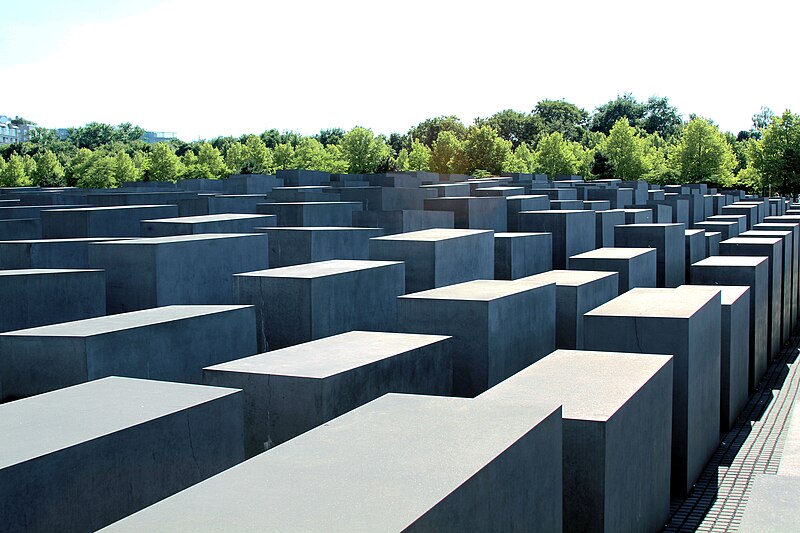
On 14 January 2026, as part of its efforts to mark International Holocaust Remembrance Day, the Commission organised the Holocaust remembrance conference ‘Remembering the Past. Shaping the Future', in partnership with the Cypriot Presidency of the Council and Brussels-based Jewish umbrella organisations. Photo by Mary-Grace Blaha Schexnayder, Wikimedia commons.