














The European Parliament is set to revive a controversial trade agreement with the United States, with a committee vote scheduled for Thursday after weeks of political
uncertainty and transatlantic tensions.
Members of the Parliament’s International Trade Committee will decide whether to move forward with the deal, which had been temporarily shelved amid shifting US tariff policies. Negotiators confirmed on Tuesday that the process is now back on track.
A deal shaped by tariffs and tensions
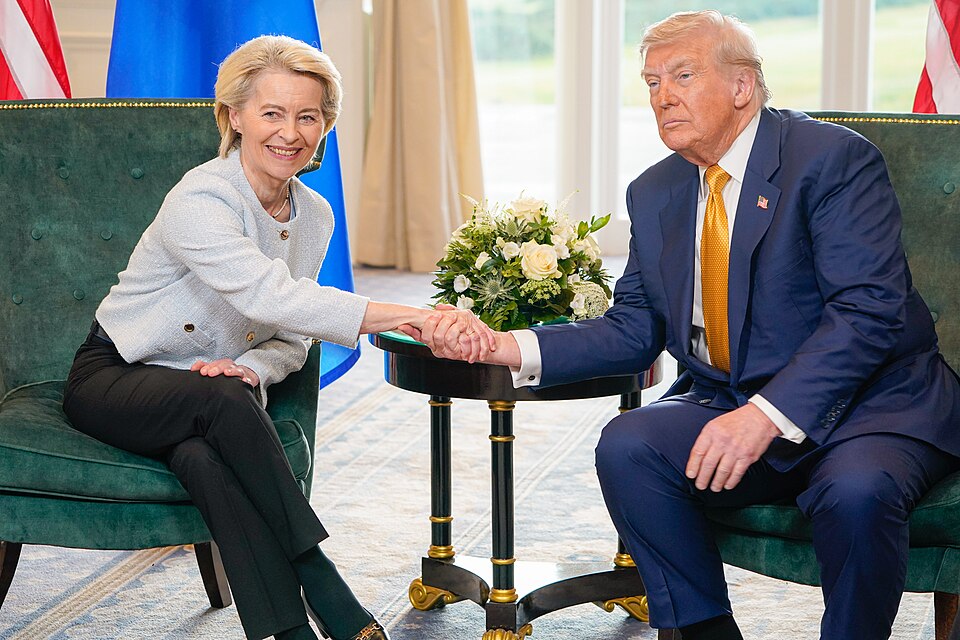
The agreement, originally struck last summer between European Commission President Ursula von der Leyen and US President Donald Trump, aims to eliminate tariffs on industrial goods exported to the US while expanding access for selected agricultural and fishery products.
However, the path to ratification has been far from smooth. Earlier this year, lawmakers halted discussions following a ruling by the Supreme Court of the United States that declared global US import tariffs unlawful. Fresh tariff threats from Washington only deepened concerns in Brussels.
New safeguards aim to ease concerns
To address political divisions, EU negotiators introduced a series of safeguards. These include a “sunset clause” that would automatically end the agreement by March 31, 2028, and provisions allowing the European Commission to suspend tariff benefits if the US fails to meet its obligations or if European industries face serious harm.
More recently, a “sunrise clause” was added at the request of the Socialists and Democrats group, ensuring the deal will only take effect once clear and enforceable conditions are in place.
Political pressure still looms
Despite the renewed momentum, skepticism remains among some lawmakers. Kathleen Van Brempt welcomed improvements to the agreement but warned that broader geopolitical concerns have not disappeared.
She stressed that support for the deal is closely tied to how the EU responds to ongoing pressure from Washington. According to Van Brempt, Parliament will not approve any arrangement perceived as conceding too much without firm guarantees.
What happens next
If Thursday’s committee vote passes, the agreement will move to a full parliamentary vote—potentially as early as next week in Brussels or during the April plenary session in Strasbourg. Final approval will also depend on alignment with EU member states.
For now, the revived deal signals cautious optimism—but its fate will hinge on whether lawmakers are convinced it strikes the right balance between economic opportunity and political leverage. Photo by © European Union, 2026, Wikimedia commons.