








Romania’s coalition government has approved a sweeping package of public administration job cuts as it intensifies efforts to rein in the European Union’s largest budget deficit.
Under a decree adopted on Tuesday, town halls across the country will shed 12,794 positions by 2027 at the latest, while the wider public administration is set to lose around 10% of currently filled jobs. The measures form part of a broader push to curb state spending and restore fiscal balance.
The cuts are expected to generate savings of 1.6 billion lei ($371 million) in 2026, rising to 3 billion lei annually from 2027, according to the regional development minister, who briefed reporters after the cabinet meeting.
Mayors have been given some flexibility. Local authorities may postpone staff reductions until 2027, provided they cut wage bills by 10% this year. Any job and spending cuts already implemented by the central government in 2025 will also be counted toward the overall targets. State hospitals, the military, and national security roles will be exempt, subject to specific conditions.
The decision comes amid persistent political strain. Since taking office last June, the four-party coalition has weathered six no-confidence votes, largely triggered by tax increases and spending restraint aimed at stabilising public finances and protecting Romania’s investment-grade credit rating. Disagreements within the coalition have slowed progress on workforce reductions, and the 2026 budget remains unapproved.
Prime Minister Ilie Bolojan said the cabinet plans to submit the long-delayed budget to parliament next week.
Romania faces a steep fiscal challenge. The government must narrow a deficit that exceeded 9% of GDP in 2024 to 6.2% this year, with the longer-term goal of meeting the European Union’s 3% ceiling by the end of the decade.
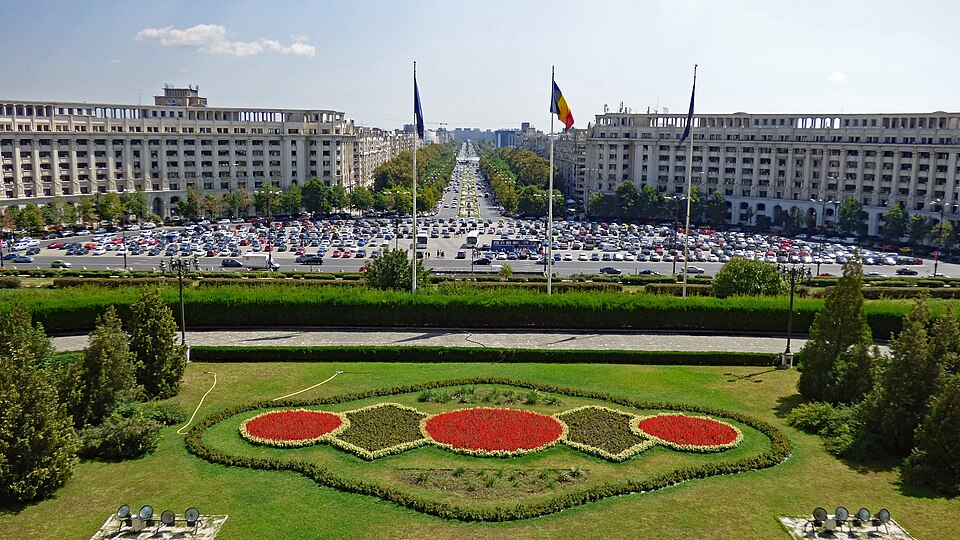
Alongside austerity measures, the cabinet also approved a slate of support schemes, incentives, state aid and tax exemptions worth an estimated €5 billion ($5.9 billion) through 2032, designed to stimulate growth after the economy slipped into a technical recession late last year. Photo by Arvid Olson, Wikimedia commons.