











Dutch prime minister Rob Jetten used his first foreign trip since taking office to press the Netherlands’ priorities with European partners, holding a packed
day of talks in Brussels focused on migration, Iran and Europe’s security architecture.
In meetings with European Commission president Ursula von der Leyen, Jetten discussed proposals for so-called “return hubs” — facilities outside the EU intended to process rejected asylum seekers. While a similar idea pursued by a previous Dutch government, involving Uganda, ultimately collapsed, Jetten signalled the concept is far from dead.
“There are enough other countries open to this sort of innovative alliance,” he told Dutch daily De Telegraaf.
The Brussels visit marked Jetten’s first appearance on the European stage as prime minister, and Dutch media were quick to note his confident, fluent English as he navigated a tightly scheduled diplomatic debut.
Beyond migration, talks also touched on the Middle East, including Iran, and broader security concerns. Jetten met NATO secretary general Mark Rutte, Belgian prime minister Bart De Wever, and briefly exchanged views with European Council president Antonio Costa and European Parliament president Roberta Metsola.
According to Jetten, the new Dutch coalition — made up of D66, VVD and CDA — is determined to restore the Netherlands’ influence in Europe.
“The Netherlands is back at the table,” he told reporters, outlining a strategy built on close cooperation with Berlin and Paris. Germany, he said, remains the key partner on economic policy, energy and climate, while relations with France are deepening rapidly on defence.
That includes support for French president Emmanuel Macron’s proposal to expand France’s nuclear deterrent as a more explicitly European project. On Monday, Dutch foreign minister Tom Berendsen and defence minister Dilan Yesilgöz told MPs that The Hague backs the initiative, although details of how the cooperation would work remain unclear.
Macron has suggested that participating countries could join French nuclear exercises, host French nuclear assets on their territory and contribute in non-nuclear ways to the deterrent. He said eight countries — including the Netherlands — have already agreed to take part in what he described as a new “advanced deterrence” strategy.
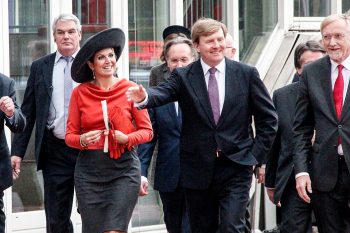
For Jetten, the message from Brussels was clear: the Netherlands intends to build “clever coalitions” that protect Dutch interests while reinforcing Europe’s collective strength. Photo by Martijn Beekman / D66, Wikimedia commons.