









The foreign ministers of Poland and Romania on Tuesday appealed for restraint in the Middle East, calling on all parties to respect international law and prioritise the protection
of civilians as regional tensions continue to rise. Speaking at a joint press conference in Warsaw, Polish Foreign Minister Radosław Sikorski said he and Romanian Foreign Minister Oana Toiu had discussed developments in Iran and across the wider Middle East, warning of the growing humanitarian and security risks.
“We call on all sides to exercise restraint, respect international law and protect civilian populations,” Sikorski said.
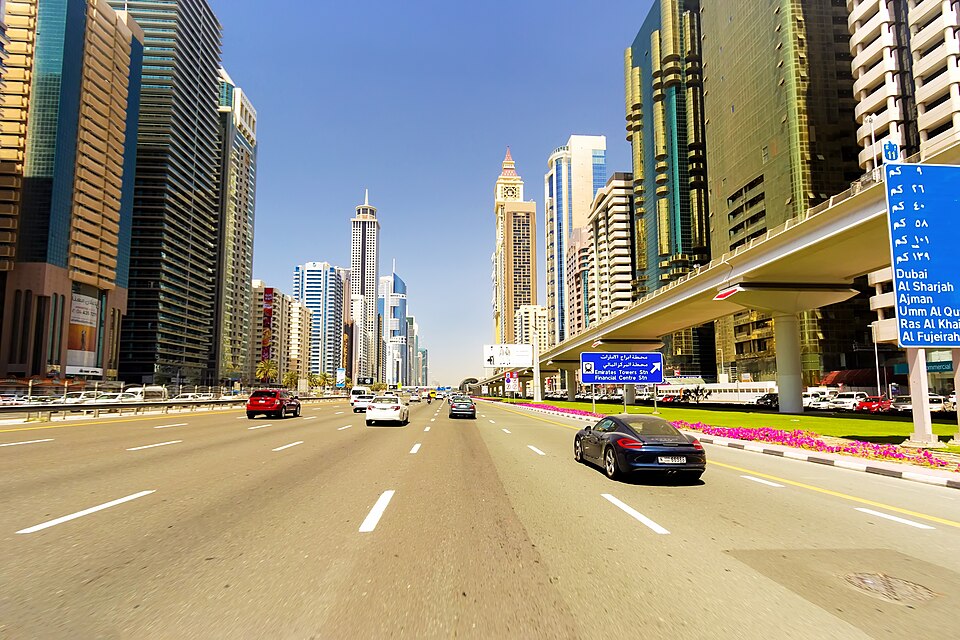
He stressed that Poland stands in solidarity with Gulf states including Qatar, Bahrain, Kuwait, the United Arab Emirates, Saudi Arabia, Jordan and Oman, noting that several countries not originally involved in the conflict have nonetheless been affected by the escalation.
Ensuring the safety of Polish citizens in the region remains a top priority, Sikorski added.
Impact on Ukraine a growing concern
Asked whether the Middle East crisis could affect international efforts to support Ukraine, Sikorski said the full consequences were still unclear but warned of one unavoidable reality: weapons consumed elsewhere cannot be redirected to Kyiv.
“Large quantities of cruise missiles and air defence systems are being used in the region,” he said. “Whatever is used up will not be available for transfer or sale to Ukraine. That effect is unfortunately certain.”
Deepening Polish-Romanian cooperation
Beyond the Middle East, the talks underscored the depth of the Polish-Romanian strategic partnership, which was established 17 years ago. The ministers agreed to resume intergovernmental consultations, with a fifth round scheduled to take place in Warsaw later this year, and to begin work on a new joint action plan covering 2027–2031, according to Poland’s state news agency PAP.
Sikorski said both sides would also restart their strategic dialogue at the level of deputy foreign and defence ministers and urgently launch a joint commission focused on defence industry cooperation.
The ministers confirmed plans for a future trilateral meeting in Bucharest involving the foreign ministers of Poland, Romania and Turkey — the three largest countries on NATO’s southeastern flank — and pledged to strengthen cooperation within regional frameworks such as the Bucharest Nine and the Three Seas Initiative.
Security, history and the Eastern flank
Both ministers reaffirmed that a strong trans-Atlantic partnership with the United States remains the cornerstone of European security, while agreeing that Europe must take greater responsibility for its own defence.
Toiu noted that Tuesday marked the 105th anniversary of the signing of a Polish-Romanian alliance convention — one of Europe’s earliest security agreements — and said its relevance endures amid what she described as ongoing threats from the east.
“Beyond historical considerations, my presence here confirms our strategic partnership — Poland and Romania ensure the security and stability of the eastern flank,” she said.
The ministers also discussed strengthening defence industries, increasing national funding, countering Russian hybrid threats, and supporting Ukraine’s and Moldova’s ambitions to join the European Union.
Security concerns and Iran
Responding to reports in Gulf media suggesting that an Iranian diplomat had mentioned Poland as a potential target of terrorist attacks, Sikorski said Iran has a track record of targeting third countries, including states that have not directly attacked it.
“From this regime, one can expect anything,” he said, adding that Poland has stepped up security measures at its diplomatic missions abroad. Photo by Vikramjit Kakati, Wikimedia commons.