









A growing international presence is beginning to reshape local politics in Eindhoven, as several foreign-born candidates secured seats in the city council following the latest
municipal elections.
With final results confirmed, parties that actively courted international voters appear to have gained ground. The Christian Democratic Appeal (CDA) increased its representation by three seats, bringing its total to nine, while the liberal progressive party D66 added two seats, reaching seven.
Both parties had made deliberate efforts to engage Eindhoven’s international community—an increasingly influential segment of the city’s population. Their strategies appear to have paid off, with multiple foreign-born candidates winning council positions, in some cases through strong personal vote totals despite lower positions on party lists.
Among the standout winners is Alina Totti, a Romanian-born candidate for D66. Ranked seventh on the party list, she secured a seat through a combination of list placement and significant preferential votes. Totti had focused her campaign on raising awareness among EU citizens and long-term residents about their right to vote in municipal elections.
Describing her election as “surreal,” Totti said it reflects Eindhoven’s evolution into a city that not only attracts global talent but also entrusts it with civic responsibility. She emphasized that representation should keep pace with the city’s changing demographics, noting that many internationals remain unaware of their voting rights or feel disconnected from local politics.
Totti also highlighted the challenges faced by migrant workers from countries such as Poland, Romania, Bulgaria, and Spain. Often arriving through employment agencies, many encounter difficult working conditions and housing insecurity—issues she intends to address in her new role.
Another notable result came from Chaitali Sengupta, an India-born writer and language specialist who has lived in Eindhoven for over 20 years. Running for the CDA, Sengupta secured a council seat despite being placed 14th on the party list, thanks to strong voter support.
Sengupta, who identifies with the CDA’s emphasis on family values, has pledged to focus on inclusion and integration. One of her key priorities is improving language support for internationals, including expanding opportunities such as evening language cafés where Dutch learners can practice with native speakers.
She also advocates for greater participation of internationals in local community life, encouraging involvement in neighborhood associations as a pathway to deeper integration.
Miriam Frosi, leader of the CDA group and herself Italian-born, pointed to the significant role international candidates played in the party’s success. She noted that foreign-born candidates collectively received over 4,000 votes—equivalent to approximately two and a half council seats.
While it remains unclear whether international voters directly contributed to the rise in turnout—from 41.8% to 44.4%—Frosi said the impact of diverse candidates is undeniable. She has long championed more multilingual communication from the city, particularly around voting rights.
D66’s lead candidate, Chris Dams, echoed the sentiment that international engagement is increasing. He cited targeted efforts such as English-language campaign materials and an international debate conducted in English that drew more than 200 attendees.
Dams also stressed the importance of including international voices in policy discussions, especially as Eindhoven continues to grow rapidly. He acknowledged that in recent years, the concerns of internationals may not have been sufficiently represented.
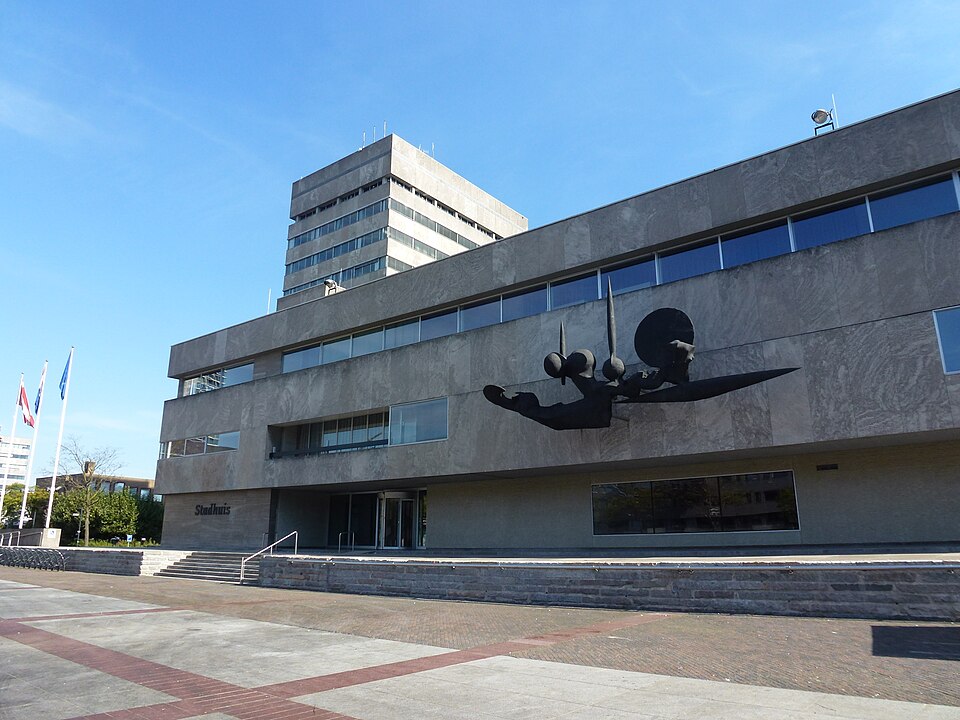
“With more internationals settling permanently and becoming part of the city, it’s essential that their perspectives are included in decision-making,” Dams said. “This election shows that change is underway.” Photo by Rosemoon, Wikimedia commons.