














Jewish leaders across Europe are urging the European Union to create a clear regulatory framework for Jewish circumcision after a controversial
criminal investigation in Belgium ignited diplomatic tensions and alarm within Jewish communities.
At the center of the dispute is an investigation into three mohels in Antwerp—religiously trained practitioners who perform Brit Milah, the Jewish ritual circumcision of infant boys on the eighth day after birth. While circumcision itself is not banned in Belgium, the lack of an official accreditation system for mohels has left the practice in a legal grey zone.
That ambiguity exploded into public view after U.S. Ambassador to Belgium Bill White sharply criticized Belgian authorities, accusing them of antisemitism and calling for the investigation to be dropped. His remarks prompted an unusual diplomatic response: the ambassador was summoned to Belgium’s foreign ministry.
“Put an end to this unacceptable harassment of the Jewish community here in Antwerp and in Belgium,” White said, arguing that the prosecution of the mohels amounted to discrimination against a core Jewish religious practice.
Police raids revive painful memories
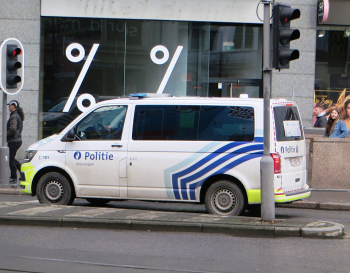
The case dates back to May 2025, when Belgian police raided the homes of the three Antwerp mohels, confiscated their ritual instruments, and requested lists of infants circumcised in the previous year. For many Jewish leaders, the actions echoed some of the darkest chapters of European history.
*Brit Milah*—the removal of a small portion of the foreskin of an eight-day-old baby—has been practiced for thousands of years and is considered a foundational commandment of Judaism. The ritual is traditionally performed by mohels who undergo extensive religious and practical training.
Belgium requires medical procedures to be carried out by licensed medical professionals, typically in hospital settings. Yet doctors are not trained in the religious aspects of *Brit Milah*, and Belgium has no formal system for certifying mohels. As a result, any non-physician circumcision could, in theory, be deemed illegal.
Other EU countries have taken a different approach. In Germany, Austria, and Sweden, non-physicians may perform circumcisions if they are authorized by the authorities at the recommendation of religious communities.
European Jewish leaders appeal to Brussels
Concerned that the Antwerp investigation could pave the way for a broader ban, the European Jewish Association (EJA), representing hundreds of Jewish communities, sent a letter co-signed by Jewish leaders from across the continent to Ursula von der Leyen. Copies were also sent to Oliver Várhelyi, Magnus Brunner, and Katharina von Schnurbein.
The letter warned that “banning circumcision would mean an end to Jewish life in countries with such law,” a result that would directly contradict the EU’s stated goal of fostering Jewish life. The authors described the police raids as a breach of the fundamental right to freedom of religion and cautioned that efforts to criminalize circumcision are historically linked to periods of severe persecution of Jews.
They called on the European Commission to convey the “deep concerns of Jews in Europe” to the Belgian government.
Medical backing for religious practice
The appeal was accompanied by an open letter from European medical professionals citing research showing that circumcised men face lower risks of urinary tract infections, penile cancer, penile infections, and certain sexually transmitted diseases, including HIV.
The doctors emphasized that mohels are highly trained, experienced, and well-versed in anatomy, often drawing on intergenerational knowledge passed down for millennia. They argued that parents are best placed to decide whether their children should be circumcised and that mohels operating under strict Jewish legal guidelines are fully capable of performing the procedure safely.
Male circumcision is practiced worldwide for religious, cultural, and hygienic reasons. In the United States, approximately 75 percent of men are circumcised.
Toward an EU solution?
According to Israel Hayom, Israel’s Chief Rabbi Kalman recently met with senior EU officials, including Commissioner Várhelyi, to explore a European-level solution. One proposal reportedly under discussion would see the State of Israel issue licenses for mohels that could then be recognized across the EU.
For now, Brussels is cautious. An EU spokesperson noted that, under EU treaties, health policy remains the responsibility of individual member states. However, the spokesperson reaffirmed that fostering Jewish life is a central pillar of the EU Strategy on Combating Antisemitism and Fostering Jewish Life (2021–2030).
“The Commission will continue, together with the Member States, to ensure that Jewish people can go about their lives in line with their religious and cultural traditions,” the spokesperson said.
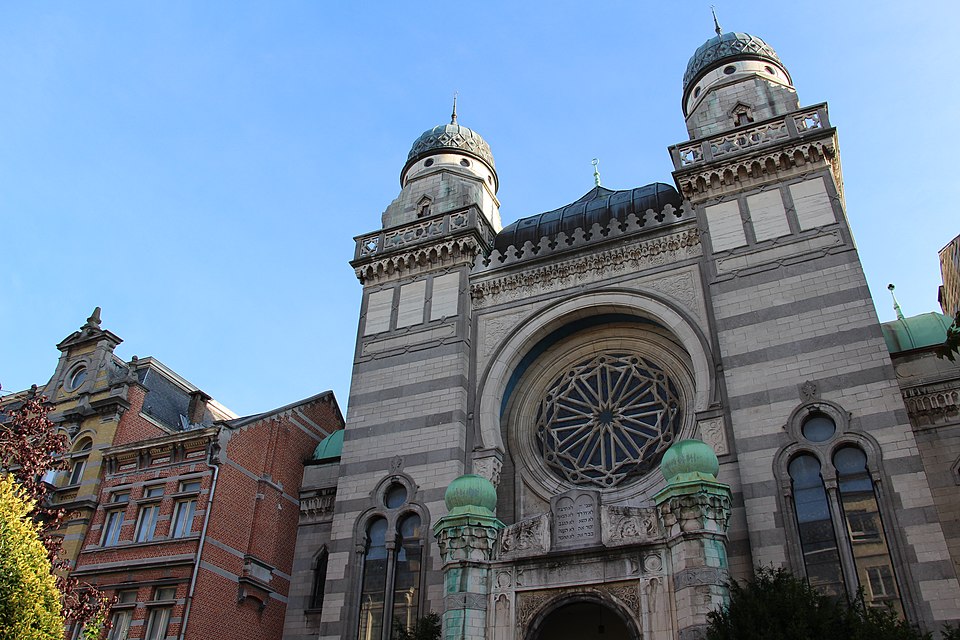
As the Antwerp case continues, Jewish leaders warn that without legal clarity, a centuries-old religious practice—and the future of Jewish life in parts of Europe—remains at risk. Photo by Fred Romero from Paris, France, Wikimedia commons.