







As local elections draw closer, mayors across the Netherlands are issuing stark warnings about a political climate they say is becoming harsher, more
polarized, and increasingly hostile to democratic norms.
An analysis by ANP of around 100 recent mayoral speeches—delivered at New Year receptions, commemorations, and other public gatherings—reveals a shared unease about intimidation, eroding civility, and growing pressure on local democracy. The speeches were given just weeks before voters head to the polls in municipal elections.
Several mayors warned that threats and personal attacks are already having tangible consequences. “Threats even lead some council members to no longer seek reelection,” said Maarten Haverkamp, describing a climate that discourages public service. Cor Lamers echoed that concern, noting that political differences are “quickly exaggerated,” social interactions are strained, and public debate is hardening. Mayors in Zaltbommel and De Fryske Marren also spoke of a loss of basic standards of decency in public life.
The concern, they stressed, extends well beyond party politics. During a Holocaust remembrance ceremony, Karen Heerschop warned of the dangers of dehumanizing language. “Even today we see how people are reduced to groups, to enemies, to inferiors,” she said, adding that harsh words can ultimately lead to violence. While history never repeats itself exactly, she cautioned that language portraying migrants, religious minorities, LGBTQI+ people, and political opponents as “internal enemies” is becoming increasingly normalized. “In Nazi Germany, it started exactly like this,” she said.
Many mayors urged national leaders to take responsibility for the tone they set. Nicole Ramaekers did not mince her words, saying the country no longer needs politicians who behave “as if they are constantly in puberty—impulsive, egocentric, polarizing, always blaming others, spreading disinformation, and focused only on attention and short-term gains.”
Some criticism reached beyond Dutch borders. The mayor of Hendrik-Ido-Ambacht pointed to international examples, referencing U.S. President Donald Trump and his allies. “There are world leaders for whom facts are negotiable,” the mayor said, also criticizing the influence of social media algorithms that, in his view, manipulate and divide societies. He singled out tech leaders such as Elon Musk, arguing that extreme wealth comes with responsibility. “There is such a thing as too rich,” he said.
Similar frustration was voiced by the mayor of Renswoude, who lamented what he described as a loss of moral direction among global powers. “Leaders of the major powers have lost their way,” he said, accusing them of pursuing personal power and position at the expense of human lives.
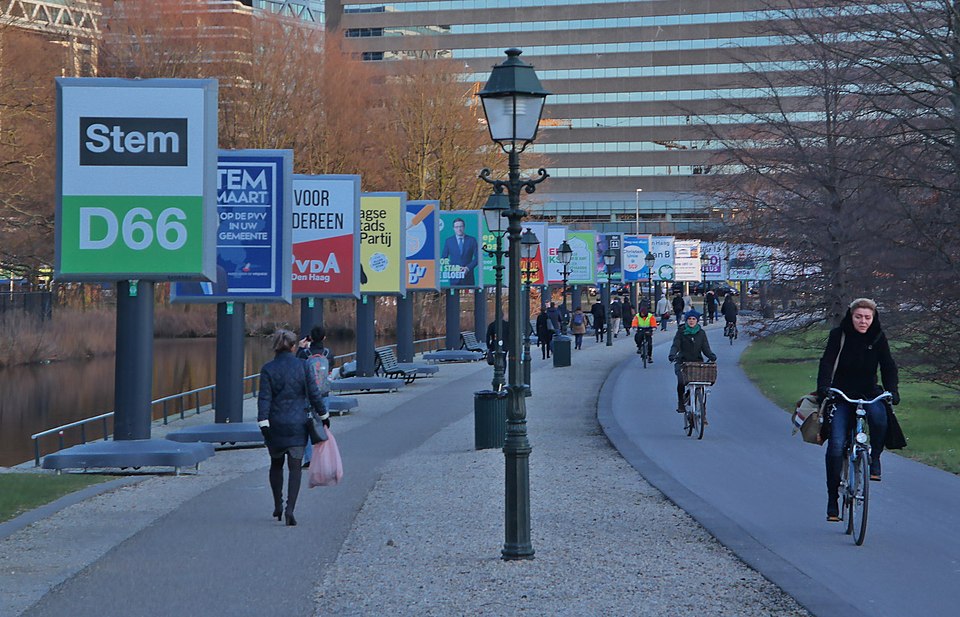
Together, the speeches paint a picture of local leaders deeply worried about the state of public discourse—both at home and abroad—and about what it means for democracy at the grassroots level. With elections approaching, many mayors say the challenge is no longer just winning votes, but safeguarding respect, dialogue, and trust in democratic institutions. Photo by Steven Lek, Wikimedia commons.