















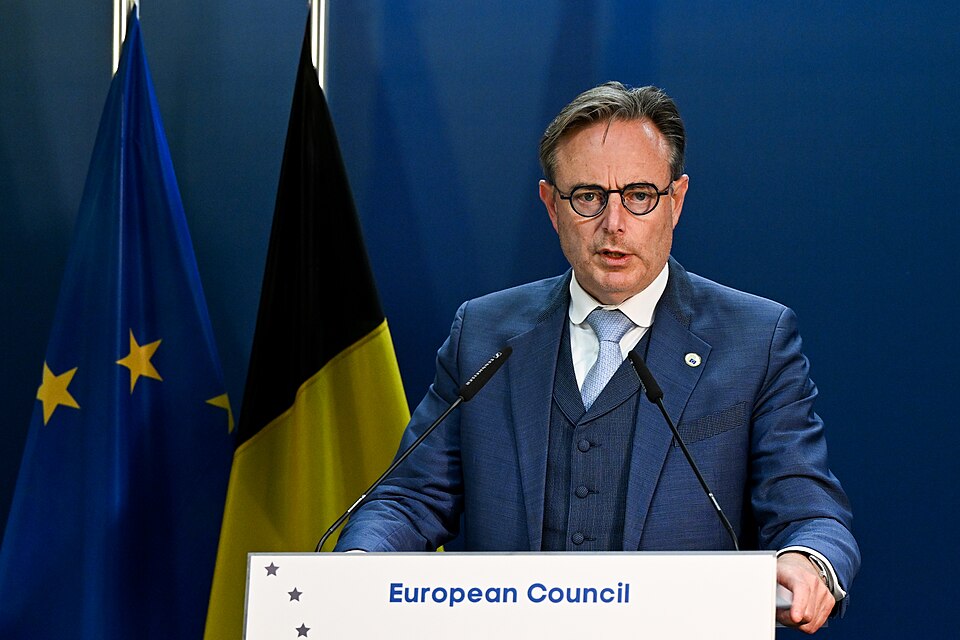
Belgian Prime Minister Bart De Wever is urging the European Union to adopt a tougher, more unified stance against China’s trade practices, warning they are increasingly
undermining Europe’s industrial strength.
In a letter addressed to European Commission President Ursula von der Leyen, De Wever raises concerns over what he describes as structural imbalances in the EU-China economic relationship. According to reports from Belgian media, he argues that Beijing’s policies are putting European industries at a growing disadvantage.
At the heart of his argument is China’s renewed push for export-led growth. De Wever highlights early 2026 figures showing a sharp 20% rise in exports, particularly in sectors crucial to Europe’s future competitiveness—such as green technologies, chemicals, and pharmaceuticals.
He also accuses China of maintaining an uneven playing field for foreign companies operating within its borders. European firms, he says, often face forced technology transfers and risks to intellectual property, while Chinese companies entering Europe benefit from significant state subsidies. These firms frequently rely on their own workforce, limiting economic spillover into local markets.
Beyond trade, De Wever points to broader geopolitical risks. He warns that China’s tightening grip on global supply chains—especially through export controls on critical raw materials—could be used as a strategic tool. Additional concerns include cyber threats, alleged espionage activities, and China’s support for Russia’s wartime economy. He further cautions that rising tensions around Taiwan could disrupt global semiconductor supplies, a cornerstone of Europe’s tech industry.
Against this backdrop, De Wever argues that the EU’s current framework—viewing China simultaneously as a partner, competitor, and systemic rival—is no longer fit for purpose. He is calling for a clearer, more assertive policy direction.
Among his proposals are stronger powers for the European Commission to investigate unfair trade practices and improved coordination among EU member states to prevent fragmented bilateral deals with third countries.
He also emphasizes the need for Europe to diversify its economic partnerships. Strengthening ties with countries such as the United States, Canada, Japan, and India, he argues, would help reduce reliance on China while reinforcing Europe’s position in global supply chains.
De Wever acknowledges that a firmer stance could provoke retaliation from Beijing, including restrictions on key exports. Nevertheless, he insists the EU must be prepared to bear short-term costs for long-term stability.
“We have reached a point of no return,” he warns, stressing that difficult decisions are necessary to safeguard Europe’s economic future and the wellbeing of its citizens.
He concludes by calling for China’s trade practices to be a top priority at the upcoming European Council summit in Cyprus this April. Photo by © European Union, 1998 – 2026, Wikimedia commons.