












The European Union’s environmental economy is expanding at a steady and increasingly significant pace, both in terms of jobs and economic output. New data released by
Eurostat highlights how the sector has evolved into a key pillar of Europe’s transition toward a greener, more sustainable economic model.
Employment in the EU’s environmental economy rose markedly over the past decade, growing from 3.6 million full-time equivalent jobs in 2014 to 5.8 million in 2023. This represents an increase of 2.2 million jobs, or an average annual growth rate of 5.5%. Even on a year-to-year basis, the sector continues to show resilience: employment climbed by 4.2% between 2022 and 2023 alone.
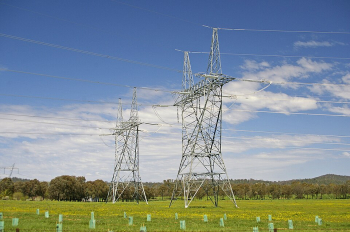
These jobs span a broad range of activities. On one side are environmental protection services, such as waste collection, recycling, and wastewater treatment. On the other are resource management sectors, including renewable energy production, energy efficiency improvements in buildings, and sustainable forestry. Together, these areas form the backbone of what is known as the environmental goods and services sector (EGSS).
Beyond employment, the sector’s economic footprint is also expanding. In 2023, the EU environmental economy generated €1.33 billion in output, marking a 4.3% increase compared with the previous year. Over the longer term, growth has been even more striking: since 2014, output has nearly doubled from €0.68 billion, with an average annual increase of 7.9%.
This upward trajectory reflects broader structural changes in the European economy. The EU has been actively promoting a shift toward sustainability through policies such as the Green Deal, circular economy strategies, and investments in clean energy and low-carbon technologies. These initiatives are not only aimed at reducing environmental impact but also at fostering innovation, competitiveness, and job creation.
The environmental economy is now widely seen as a strategic growth sector. It plays a crucial role in reducing greenhouse gas emissions, improving resource efficiency, and decreasing dependence on fossil fuels. At the same time, it supports regional development by creating jobs in construction, engineering, waste management, and emerging green technologies.
Looking ahead, the sector is expected to continue expanding as the EU intensifies its climate targets and accelerates the transition to climate neutrality by 2050. Investments in renewable energy, energy-efficient infrastructure, and sustainable industrial processes are likely to further boost both employment and output.
In this context, the environmental economy is no longer a niche segment—it is becoming a central component of Europe’s economic future, combining environmental responsibility with tangible economic opportunity. Photo by Diliff, Wikimedia commons.