














A new report suggests that Poland’s decision to join the European Union in 2004 has delivered a powerful and lasting boost to its economy, significantly accelerating the country’s
rise within Europe.
According to analysis by the Polish Economic Institute (PIE), Poland’s economy is now around 42% larger than it would have been outside the EU. The study, based on hundreds of economic simulations, compared real-world outcomes with hypothetical scenarios in which Poland never joined the bloc.
Researchers found that EU membership consistently delivered economic gains. Even in the most conservative scenario, Poland’s economy was 22% larger, while the most optimistic estimates suggested a boost of up to 61%. The conclusion, analysts argue, is clear: the benefits are structural, not accidental.
At the heart of this growth lies access to the EU’s single market. Membership has opened the door to increased trade, stronger foreign investment, and improvements in governance and institutions. These factors have helped transform Poland into one of Europe’s most dynamic economies.
The findings reinforce earlier PIE research published during the 20th anniversary of accession, which showed similarly strong gains when measured using purchasing power parity. This latest study instead uses real GDP in constant dollar terms, a metric economists say better reflects Poland’s global economic standing. By that measure, the country’s economy surpassed $1 trillion for the first time in 2024.
A broader success story
Poland’s economic trajectory over the past two decades has been striking. It has been one of the fastest-growing economies in Europe and notably avoided recession during the global financial crisis of 2007–2009. It also proved relatively resilient during the COVID-19 pandemic.
More recently, Poland recorded solid growth of 3.6% in 2025, placing it among the EU’s top performers. At the same time, it has steadily narrowed the wealth gap with richer member states, reaching 81% of the EU average GDP per capita.
EU funding has also played a major role. Since joining, Poland has received around €160 billion in net funds—more than any other member state—helping finance infrastructure, innovation, and regional development. Combined with strong domestic policies and a large internal market, this has positioned Poland as a key economic engine in Central Europe.
Political debate intensifies
Despite the economic evidence, Poland’s relationship with the EU has become a growing political issue. Support for a potential “Polexit” remains a minority view but has gained traction in recent polling, with around a quarter of respondents expressing support in some surveys.
The current government, led by Donald Tusk, has strongly warned against any move to leave the bloc, calling it a serious risk to the country’s future. Meanwhile, opposition parties remain divided—some advocating reform of the EU rather than withdrawal, while more eurosceptic groups push for greater national sovereignty.
Public opinion overall still leans in favor of membership, with a clear majority of Poles viewing the EU as beneficial. Yet the debate reflects broader tensions seen across Europe about integration, sovereignty, and the future direction of the union.
Looking ahead
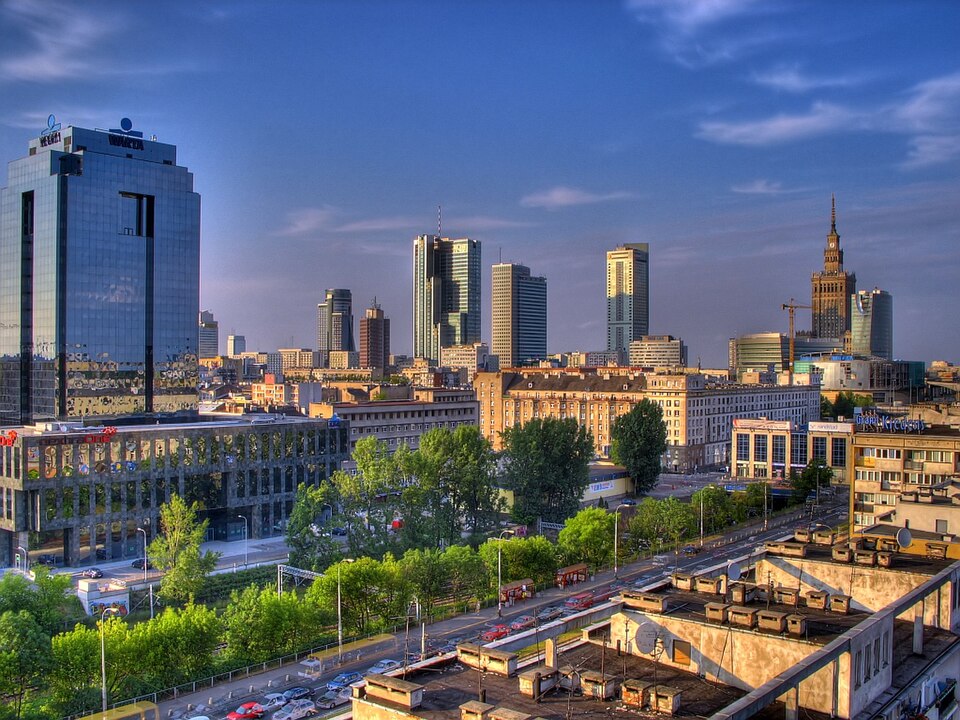
For now, the data paints a compelling picture: EU membership has been a cornerstone of Poland’s economic success. As the country continues to converge with Western Europe, its experience is increasingly cited as one of the EU’s most notable economic success stories—highlighting how integration, investment, and market access can reshape a nation’s fortunes within a single generation. Photo by DocenttX, Wikimedia commons.